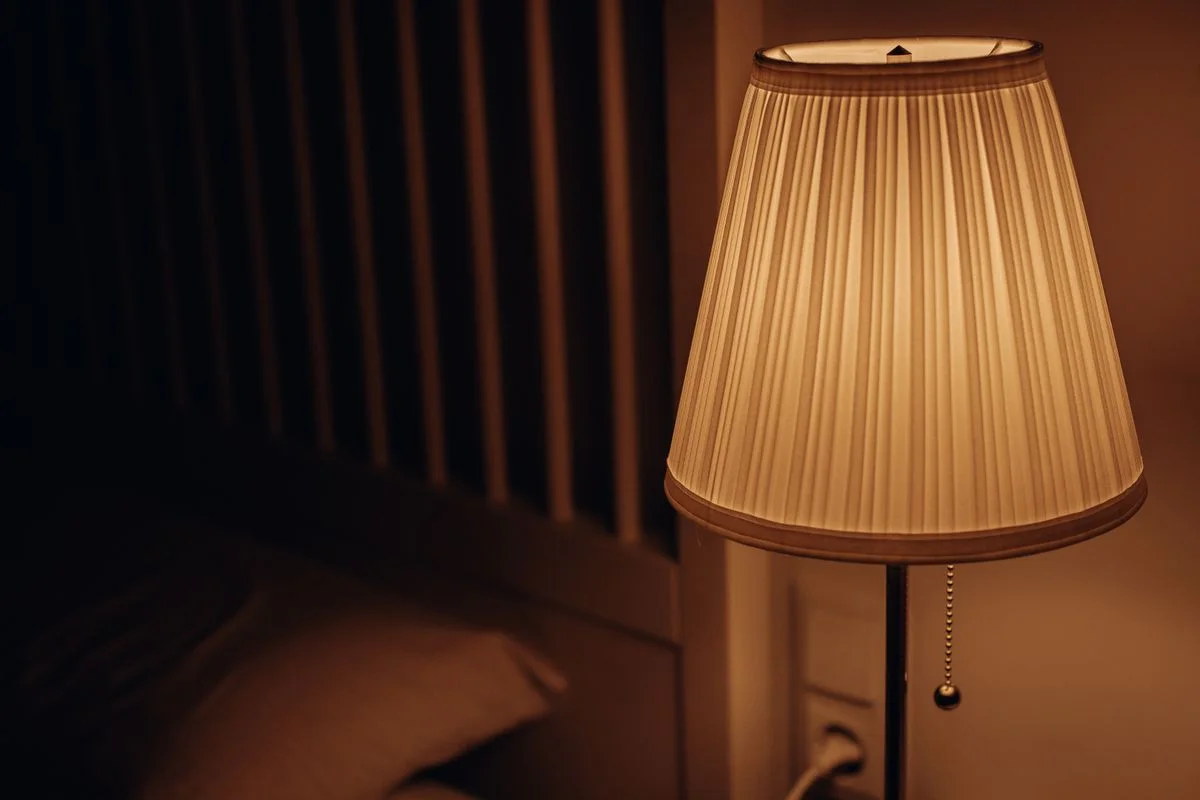
A bedside reading lamp should put light where the page is without occupying all the table or making the controls awkward to reach. Its height alone does not answer that question; shade shape, adjustability, bulb choice, and the bed's position all influence the result. Begin with the place where you sit to read and the size of the table. A simple lamp with a suitable beam and accessible switch can be more useful than a decorative design chosen only to match the room.
Locate the page and the shade
Sit in the position you use for reading and note the location of the book. Compare that with the lamp's adjustable range and the direction in which the shade opens. A fixed shade may work well in one position but leave little flexibility if you change seats or rearrange the bed. Product photographs can help explain the mechanism, though they do not prove the lighting result in your room. Check whether the light source will be directly visible from your normal resting position.
Read bulb information correctly
ENERGY STAR explains that lumens describe light output, while watts describe power use. Compare brightness using the relevant lumen figure rather than treating a larger watt number as the main benefit. Color appearance and dimming are separate choices. Check the lamp's permitted bulb type, socket, dimensions, and electrical limits, and use compatible products as instructed. A bulb can fit the socket yet be unsuitable for the shade or control arrangement, so verify the complete specification before buying several replacements.
Check the switch from the bed
An inline cord switch, base switch, touch control, or dimmer requires a different reach. Imagine turning the light off after putting the book down, with the bedside table in its actual position. A switch hidden behind the table may be inconvenient every night. If you share the room, consider how the shade directs light and whether the control can adjust it for the task. An extra charging port is useful only when its specifications suit your devices and it does not crowd the controls.
Compare footprint and future upkeep
Measure the base and the widest shade, including any arm movement. Leave room for the ordinary bedside objects and a suitable cord route. A replaceable bulb provides one maintenance arrangement; an integrated light source provides another, so check the maker's service information. Read cleaning instructions for fabric shades and articulated joints. A small movable lamp may be easier to reuse in another room, but make sure it is intended for the place where it will operate. Choose flexibility that serves a real need.
THE USEFUL TAKEAWAY
A good bedside reading lamp suits the page position, the reader's reach, and the table footprint. Compare brightness and electrical compatibility separately, then check the switch and shade direction. Useful adjustability and clear replacement information can matter more than extra controls or a decorative oversized shade.
Further information
Manufacturer and official references for the details discussed. Check instructions for the exact product you are considering.