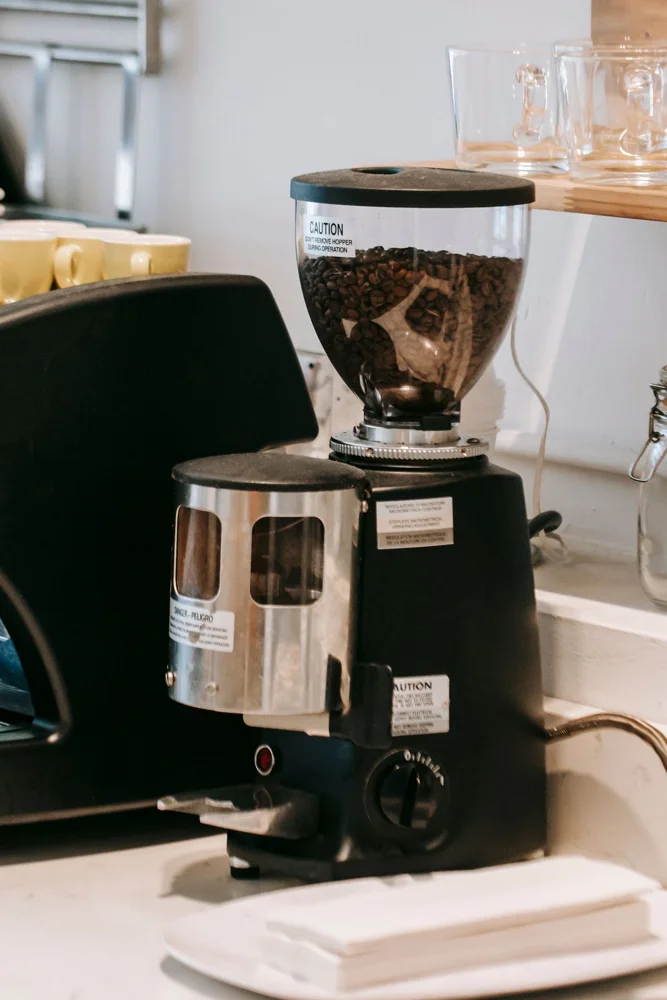
A coffee grinder should suit the way you brew today before it promises to cover every method you might try later. Espresso, filter coffee, and a French press place different demands on adjustment and daily handling. The number of settings is only part of the comparison. Think about your normal dose, how you collect the grounds, and whether you will clean the grinder as instructed. A useful model makes an existing coffee routine easier to repeat without creating unnecessary work around it.
Check the stated brewing range
Read the manufacturer's intended brewing methods and adjustment guidance for the exact model. A large setting count does not prove that the useful range or step sizes suit your method. Espresso deserves particular attention to explicit compatibility rather than a general claim of fine grinding. Baratza publishes model-specific starting and adjustment guidance, illustrating why settings should be treated as a starting point. If you change methods often, check how clearly the adjustment can be recorded and returned to a previous position.
Compare the dose with the workflow
Decide whether you prefer to load a measured quantity or keep beans in a hopper as the product allows. A large hopper can be convenient, but it increases height and may not suit your daily quantity. Check how grounds are collected: a bin, cup, or compatible holder creates a different transfer step. Compare its opening with your brewer. A design that looks compact may still need counter space for pouring beans, removing the receptacle, and brushing away ordinary residue.
Assess adjustment and cleaning access
Read the instructions for changing settings, especially any conditions the maker places on movement toward a finer grind. Follow the exact model's process rather than a tip for another grinder. Check whether burrs or other components are intended to be removed for cleaning and what tools are required. A clear official maintenance guide is a practical advantage. Do not assume that internal parts can be washed or that a general grinder-cleaning product is suitable without checking the instructions.
Consider hand effort and support
A manual grinder saves the need for a power connection but requires a repeated physical task. Compare handle length, grip, capacity, and the amount you normally prepare. An electric grinder introduces noise, cord routing, and a different footprint. Neither format is automatically better value. Check the availability of the components most likely to need service and whether the maker provides a practical support route. Choose the arrangement you will use consistently rather than paying for a future brewing setup that remains hypothetical.
THE USEFUL TAKEAWAY
Choose a grinder by method compatibility and daily workflow, then compare settings and accessories. Useful adjustment, manageable dosing, and documented cleaning matter more than a large mode count. Pay for broader capability when you have a real second brewing method, and check support before assuming a grinder will be easy to maintain.
Further information
Manufacturer and official references for the details discussed. Check instructions for the exact product you are considering.