Document folders are useful when they make a particular record easy to retrieve. A large expandable file may look efficient while combining unrelated papers so tightly that every search becomes a sorting session. Start by listing the records you frequently consult, such as appliance documents, household correspondence, or current project paperwork. Then choose a physical format around their size and retrieval pattern. The aim is a manageable home for the papers you have decided to retain, not a container that postpones those decisions indefinitely.
Choose the grouping before the folder
Some records are easiest to locate by subject, others by person or year. Use the question you would ask while searching: which appliance does this belong to, or which year was this statement from? A few clearly named groups often work better than a large alphabetical system created in advance. Do not assume every household needs the same categories. Put active matters in a separate folder so an unfinished task does not become buried among papers kept for occasional reference.
Allow for documents that are not plain sheets
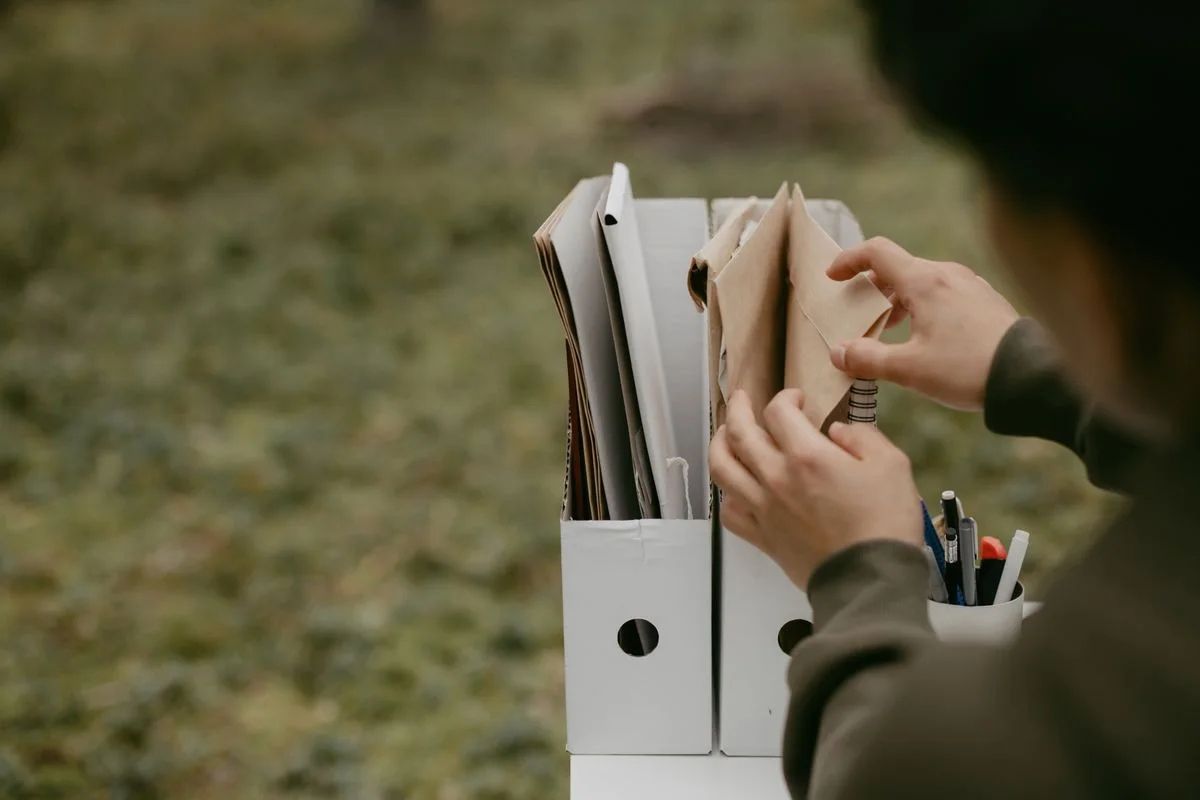
Manuals, envelopes, receipts, and folded plans take up different amounts of room. Check the folder's usable depth with a realistic sample and verify whether tabs remain readable when it is full. A binder needs space for its rings and any protective sleeves. An expandable file may narrow at the bottom, making thick booklets awkward. If papers move between home and appointments, consider a closure that retains small items. A folder that lives in a drawer can prioritize easy access instead.
Match the format to the storage place
Measure the shelf or drawer with space for lifting folders out. A handle is convenient only when it can be gripped without pulling neighboring items forward. Spine labels help on a shelf; top tabs help in a drawer. Check how the folder stands when partly filled, since a rigid organizer and a flexible wallet behave differently. Avoid choosing an oversized case for future paperwork unless there is a concrete expectation of growth. A smaller set of labelled folders may be easier to rearrange.
Build a simple review and retrieval routine
Add a contents note if a folder contains several distinct items, and record any document stored elsewhere. Decide how incoming papers reach the correct folder and when active files are reviewed. Retention requirements depend on the record and circumstances, so use the relevant issuer or authority for those decisions rather than a universal household timetable. Consider where sensitive paperwork is stored and who needs access. A decorative label should identify a useful category without exposing unnecessary personal details to every visitor.
THE USEFUL TAKEAWAY
Choose document folders after deciding how records will be grouped and retrieved. Real contents and storage access matter more than a large pocket count. Keep the system small enough to review, provide a separate home for active tasks, and check document-specific retention requirements with the appropriate source when needed.