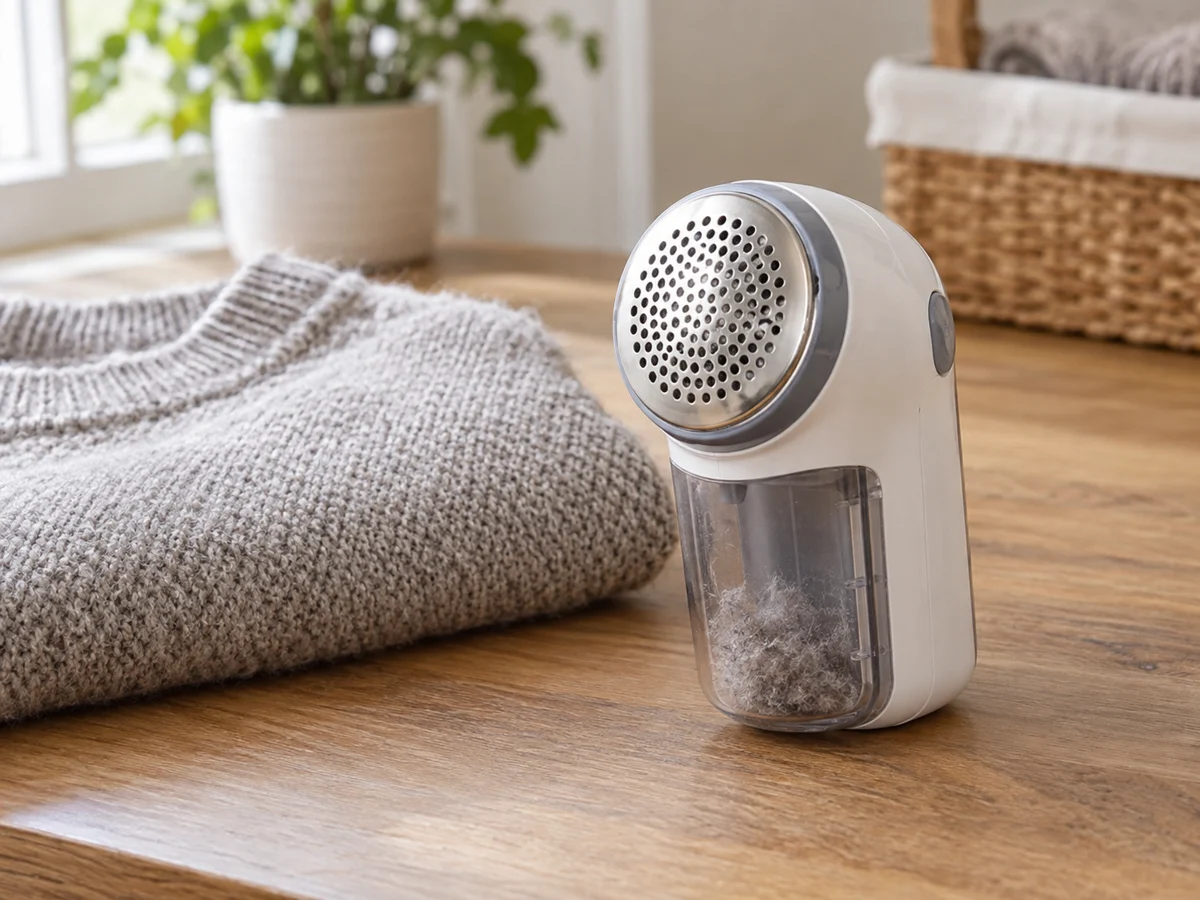
A fabric shaver can improve the appearance of suitable garments by removing surface pills, but it is not a repair tool for every worn textile. The blade assembly, guard and handling instructions matter more than a promise of making clothes look new. Start with the care requirements of the garments you want to maintain and check the shaver's stated fabric limits. Then investigate replacement blades and collection parts. A low-cost machine becomes less economical if one worn component makes the complete unit unusable.
Check suitability before power
Read both garment care information and the tool manual. Fine knits, raised textures and decorative details need particular attention, and a shaver should not be assumed suitable simply because the fabric has pills. Philips lists a delicate-fabric protector with one of its models, which illustrates that guard design is a meaningful specification. Follow the instructions for using any guard and testing a discreet area. Do not substitute pressure or speed for the maker's prescribed method.
Look at head size and control
A larger head covers a broad flat area, while a smaller one may be easier to guide around seams and buttons. Consider the weight in your hand and where the switch sits. You need to see the working area clearly as you move. A garment laid out as directed may be easier to control than trying to shave it while hanging. Check whether the head can be opened for cleaning without putting your fingers near an exposed blade.
Find replacement parts by model
Search the official support page for the exact blade assembly, foil or guard used by the machine. A similarly sized replacement pictured by a seller is not proof of fit. Check which parts the manufacturer expects the user to replace and how that work is performed. Record the part numbers with the manual. If there are no listed replacements, compare the whole unit's cost and expected use rather than describing it as a repairable purchase.
Assess power and waste handling
Battery-powered and rechargeable models involve different routines. Check battery type or charging requirements, then consider where the tool and any charger will be stored. Look at the lint container opening and whether it is easy to empty without spilling fibers over the garment. Follow the manual when clearing the head and never work on a running blade. A small cleaning brush or protective cover is useful only if it stays with the machine between occasional uses.
THE USEFUL TAKEAWAY
A fabric shaver is a targeted garment care purchase. Choose one with clear fabric guidance, controllable handling and documented parts support if repairability matters. Treat guards and maintenance instructions as essential features, and keep expectations realistic: removing suitable surface pills does not restore damaged fibers or repair a worn garment.
Further information
Manufacturer and official references for the details discussed. Check instructions for the exact product you are considering.