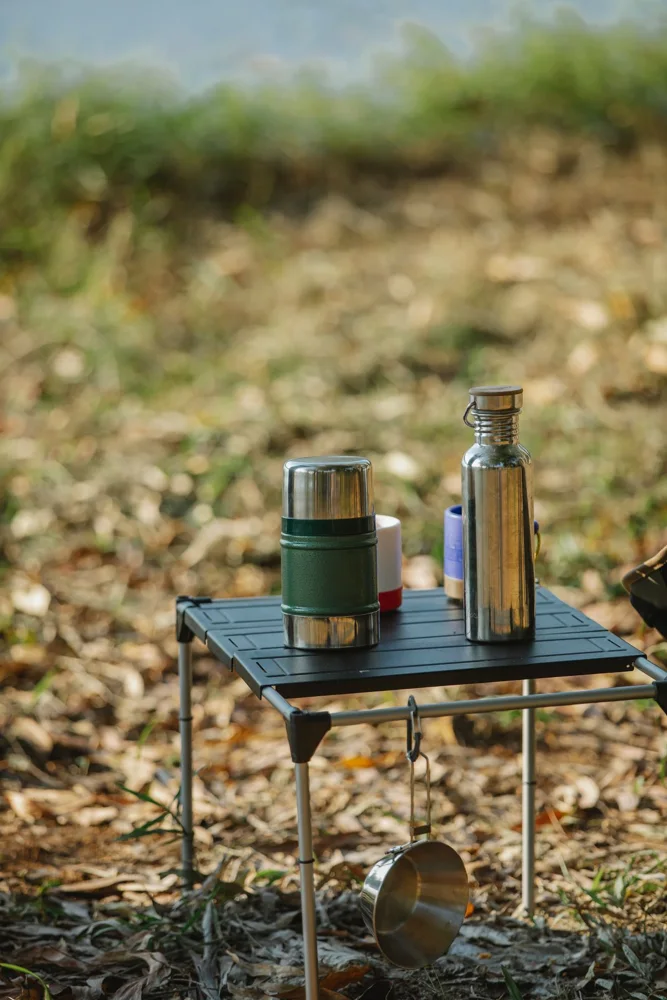
A folding table can make occasional outdoor meals possible without leaving a permanent dining arrangement in place. Its useful size is the space available for plates, serving dishes, and seated people, not simply the tabletop's widest measurement. The folded shape, carrying weight, and setup process determine whether it is convenient enough to use. Start by modeling a real meal and the chairs that will accompany it. Then compare tables as a complete temporary setup, including the place they return to afterwards.
Arrange the meal before choosing dimensions
Place the usual plates and glasses on an existing surface with any shared dishes between them. Measure that arrangement and compare it with the usable tabletop. Rounded corners, central openings, or segmented surfaces can reduce convenient space. Check the table height against the chairs, including armrests. Allow room to pull a chair back and move around it. A larger table may seat more people on paper while leaving no comfortable route around the actual balcony, patio, or picnic area.
Inspect leg placement and surface behavior
Look beneath the table at braces, crossbars, and the room available for knees. A folding mechanism can occupy space where a seated person's legs need to go. Read the stated load limit and intended uses; a dining table should not be assumed to serve as a step or work platform. Consider the surface for ordinary plates and glasses, especially if it has slats or joints. If the product offers adjustable feet, check the procedure and range rather than expecting the feature to resolve every uneven location.
Check setup and the stored shape
A tabletop that folds in half produces a different package from one with legs that fold beneath it. Compare the complete stored dimensions, handle position, and weight. Try carrying an equivalent shape if a demonstration is possible. Read how the legs lock into position and how they are released. The setup should be manageable for the person who will normally do it. If two people are needed, account for that rather than assuming the table will be used whenever one person wants to eat outdoors.
Choose care that suits occasional use
Outdoor furniture still needs appropriate cleaning and storage. IKEA's maintenance guidance differentiates material routines, so read the instructions for the actual finish rather than assuming every folding table can remain outside indefinitely. Check whether food spills can be wiped from seams and whether the table can dry before being stored. A fabric carrying case may help with transport but also needs a place when the table is in use. Buy only the covers or accessories required by the chosen arrangement, not a complete matching set by default.
THE USEFUL TAKEAWAY
A folding table is good value when it accommodates the meal and remains easy to set up and store. Check leg space and the complete folded shape as carefully as tabletop dimensions. The right modest-sized design can create a useful occasional dining area without leaving a cumbersome package between meals.
Further information
Manufacturer and official references for the details discussed. Check instructions for the exact product you are considering.