A footrest is an addition to an existing desk arrangement, so buying it in isolation can miss the reason it is needed. Chair height, desk clearance, the position of the keyboard, and the space under the work surface all affect the available setup. Before comparing textured platforms and rocking mechanisms, adjust the furniture you have and clear the floor. A footrest is useful when its height and position solve a specific support problem without making movement or access more awkward.
Set the chair and work surface first
Begin with the chair positioned for the work you perform at the desk. OSHA's desk guidance includes a footrest as an option when a chair must be raised and the feet need support. That does not mean every desk needs one. Check whether the chair can move closer to the surface and whether drawers restrict clearance. A footrest cannot create missing space under a desk. If the arrangement remains uncomfortable, consider the whole setup rather than expecting one accessory to resolve it.
Measure height and usable platform area
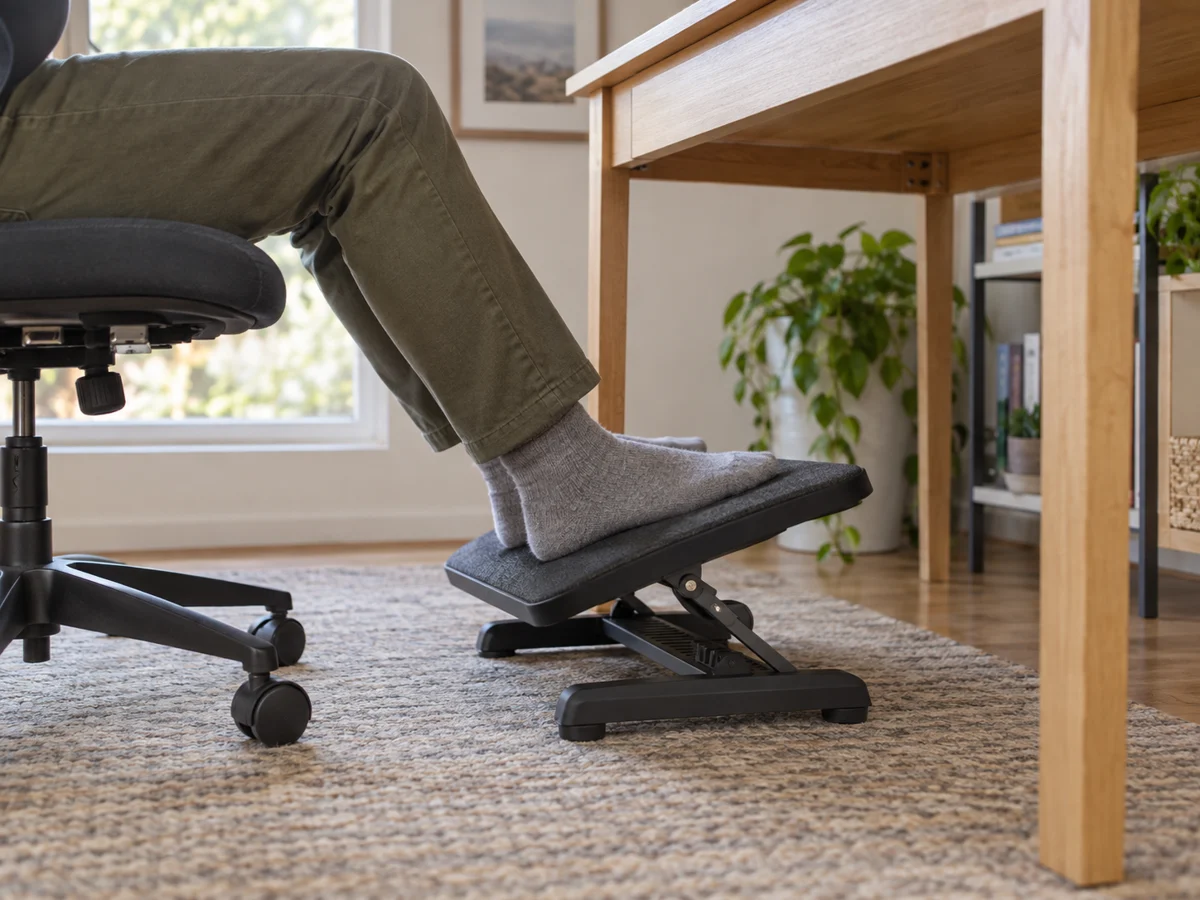
Compare the available adjustment range with the gap you intend to fill. A product's maximum height may be less relevant than its lowest setting, particularly under a shallow desk. Measure the actual standing surface, not the outer frame. Both feet should have room without being forced into a single narrow position. Consider shoes as well as bare feet if the desk is used differently during the week. A rounded cushion compresses under load, so its listed height differs from a rigid platform's fixed height.
Check movement against the floor
A rocking design can be appealing, but its movement needs room and should suit your preference. Inspect whether the angle locks, moves freely, or uses several fixed positions. On a smooth floor, the base should remain where you place it during ordinary use. On carpet, check whether the mechanism still moves as intended. Consider the chair's wheels and the path used to get in and out. Avoid a wide frame that catches the chair or requires an awkward step each time you leave the desk.
Think about sharing and cleaning
Height adjustment is particularly useful when several people use the desk. Check that changing settings is simple enough to happen rather than leaving everyone with the previous user's arrangement. A washable cover can help with a soft footrest, while a rigid platform may be easier to wipe down. Inspect grooves and moving parts for places that collect debris. If the desk is frequently cleared or relocated, weight and a carrying grip matter. Compare that everyday handling with the cost of decorative finishes or additional mechanisms.
THE USEFUL TAKEAWAY
Choose a footrest to fit an assessed desk arrangement. The useful specifications are platform area, adjustment range, floor behavior, and clearance for the chair. A straightforward stable design can be good value when it addresses a specific need; extra mechanisms are worthwhile only when they improve your everyday setup.
Further information
Manufacturer and official references for the details discussed. Check instructions for the exact product you are considering.