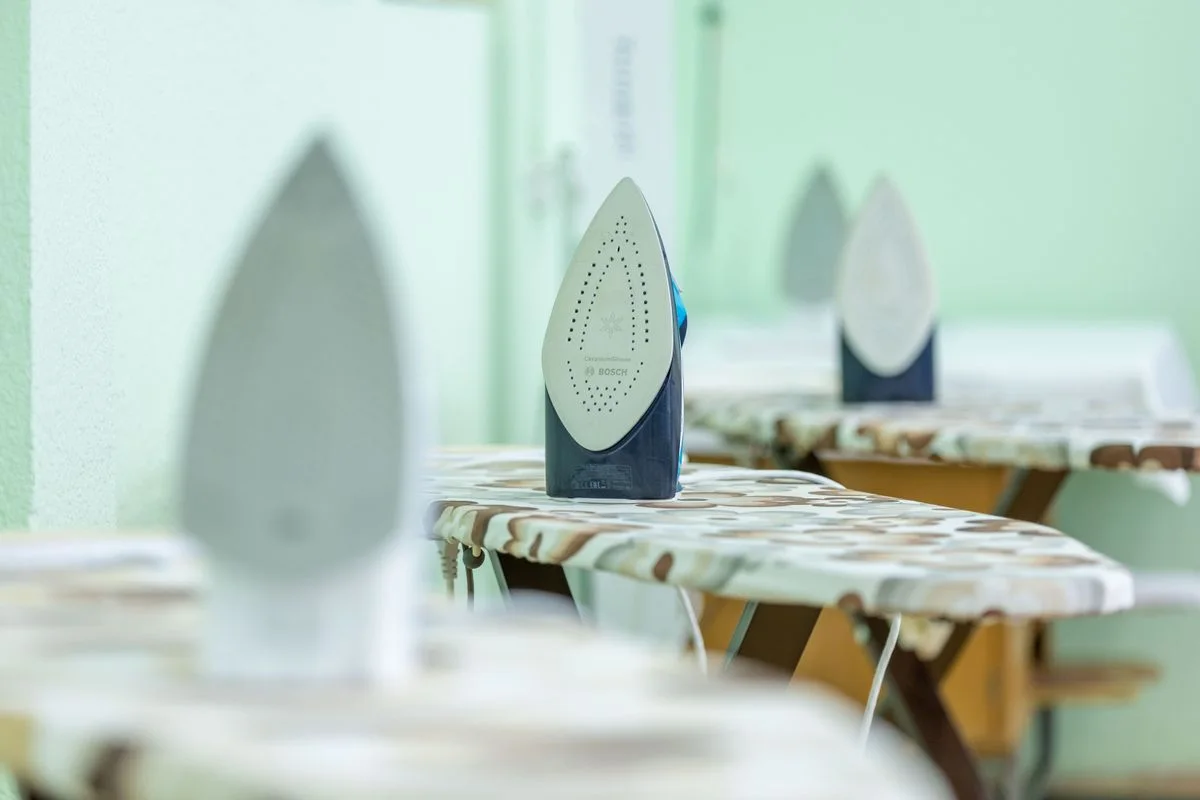
An ironing board has two sizes that matter: the space it occupies while working and the space it needs when folded. In a small home, either can be the limiting factor. A narrow board may fit behind a door but make large bedding awkward, while a tabletop model saves floor space only if you have a suitable table. Start with your usual ironing items and the location where you can work. Then trace the full setup, including opening the legs and finding a place for the hot iron.
Measure the working footprint
Read the board's open dimensions, including the iron rest, and mark that outline on the floor. Allow room to stand, move a chair out of the way and handle a long garment. Check whether legs extend beyond the top where they could catch passing feet. A compact top is useful for shirts but may require frequent repositioning of larger fabric. If ironing is occasional, consider whether a slightly smaller surface is an acceptable trade for easier setup.
Check height and stability
Look at the available height settings and the method for locking them. The board should suit the user and remain stable in the intended location. Uneven flooring can make a board that felt firm in a shop behave differently at home. Follow the installation and adjustment instructions, including any locking mechanism. Avoid using the folded dimensions as the only buying criterion: a board you cannot set securely at a comfortable working height is unlikely to remain useful.
Assess covers and iron rests
Check the board maker's guidance for the cover, padding and permitted iron placement. Replacement covers should match the top shape and size, not merely a broad size name. If your iron has a separate steam base, verify that the rest supports that exact arrangement rather than assuming every rest suits a heavier station. Inspect how the cover fastens and whether it can be removed for permitted cleaning. A replaceable cover can be a practical advantage when the board frame remains sound.
Plan folded handling and storage
Measure the folded thickness as well as height. Include knobs, hooks and projecting feet that can stop the board sliding into a gap. Check its weight and where you can grip it while carrying. A wall holder needs suitable installation and clearance to lift the board away; a door hook must suit the door and its movement. Store the board only when the appliance and surface are ready for it, following the relevant instructions rather than rushing the cooling step.
THE USEFUL TAKEAWAY
A small-home ironing board should be easy to open, stable in use and practical to put away. Choose around the items you iron most often, then verify the cover and iron rest. The best space saving arrangement is the one you can set up correctly without moving half the room.
Further information
Manufacturer and official references for the details discussed. Check instructions for the exact product you are considering.