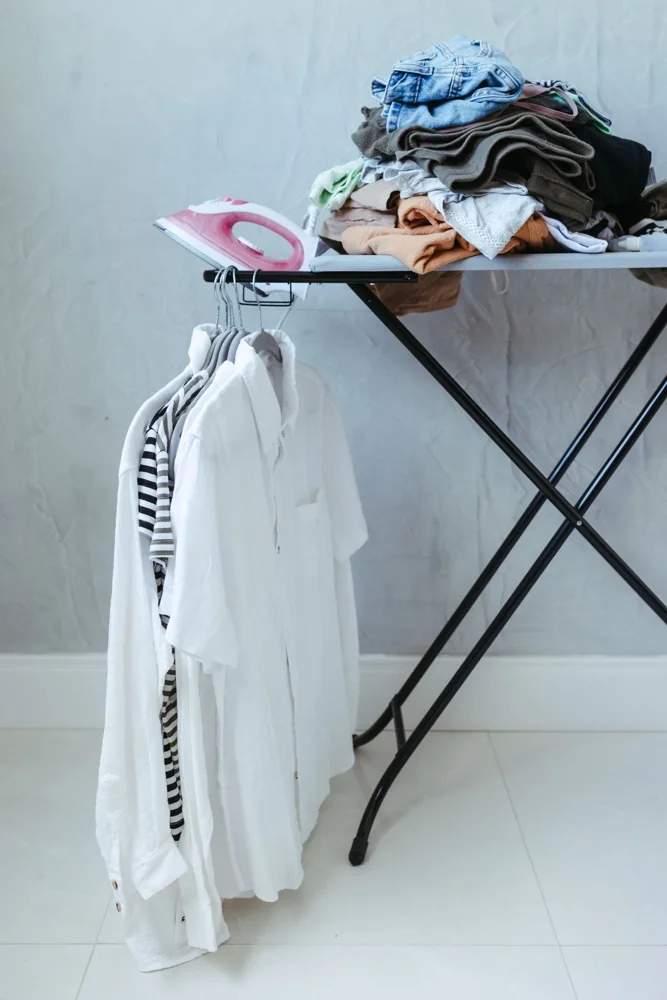
An iron used a few times a month should be straightforward to set up, control and store. Paying for a large steam system may be unnecessary if your usual job is one shirt or a tablecloth, but the cheapest compact iron can feel awkward on a larger item. Start with the fabrics and surfaces you already have. Check garment care labels, the board or ironing mat, and the cupboard where the cooled appliance will live. This helps separate genuinely useful controls from features that add bulk without improving occasional use.
Match controls to your fabrics
Look for clear temperature and steam instructions that correspond with garment care guidance. A readable dial or display is useful when the iron is used infrequently and the household needs to understand it quickly. Check whether the control is easy to change unintentionally while gripping the handle. Do not assume one setting suits all fabrics unless the model explicitly provides that operating method. The manual should explain what to do with garments that cannot be ironed or steamed.
Compare working weight and soleplate access
Hold the iron in a typical working position if possible. A heavier model can feel steady, but it must still be comfortable to lift repeatedly and guide around buttons. Look at the tip and the clearance under its edges rather than judging the soleplate only by size. Check how the heel supports the iron in its permitted resting position. Your ironing surface should suit the appliance, with enough room to move without the cord pulling across the work.
Inspect filling and water care
Check the fill opening, maximum line and the manufacturer's water recommendation. Descaling and self-cleaning procedures vary, so keep the exact instructions rather than applying a general recipe. Rowenta's published iron FAQ describes model-specific care and upright storage, demonstrating why the support page matters. A removable collector or valve needs accessible maintenance if fitted. A larger reservoir can mean fewer refills, but consider the weight at the working fill level rather than comparing empty appliances alone.
Make occasional storage convenient
Allow the iron to cool as instructed before storage. Check the cord arrangement and whether it fits your cupboard without tight bends or pressure on controls. Review emptying instructions, since not every tank is designed to drain completely. Keep a copy of the manual with the model number so the next user can find the correct settings. Before buying accessories, inspect the board cover or mat you already own; a suitable existing surface may be all the additional equipment needed.
THE USEFUL TAKEAWAY
For occasional ironing, choose clear controls, comfortable handling and a storage routine that does not become a separate project. Match the iron to your fabrics and existing ironing surface, then follow its own water and care instructions. Extra steam capacity is worthwhile only when your ordinary jobs make use of it.
Further information
Manufacturer and official references for the details discussed. Check instructions for the exact product you are considering.