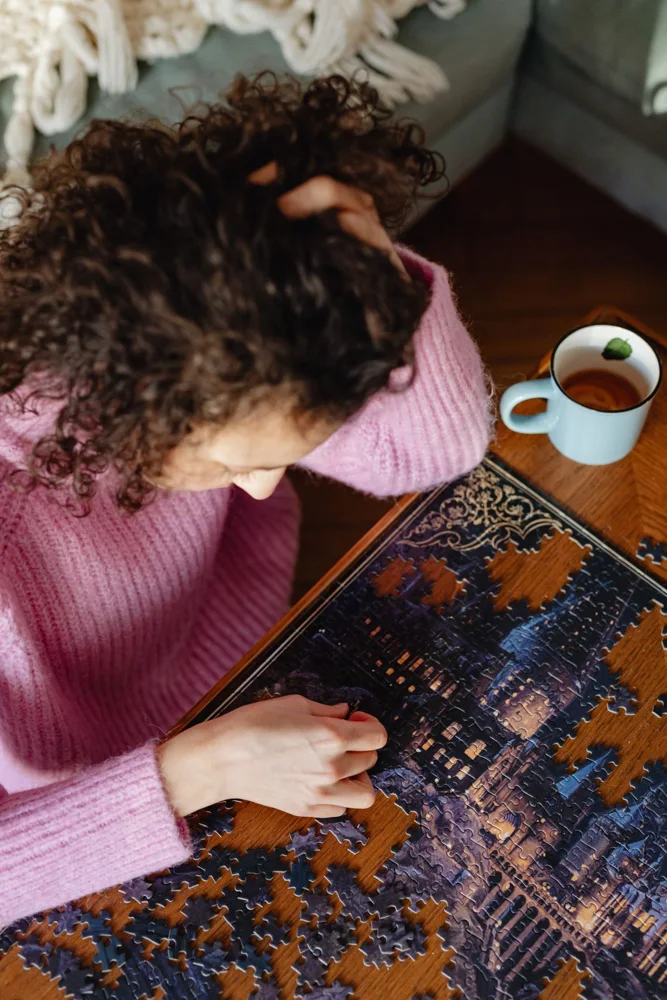
A jigsaw puzzle needs a place to remain unfinished as well as a place to be completed. Piece count can suggest scale, but the finished dimensions and sorting area determine whether it fits your home. A large puzzle bought for a dining table may become inconvenient when the table is needed again. Begin with the available surface and how long it can stay occupied. Then choose the image, piece size, and any storage accessory around a realistic way to pause and resume.
Measure more than the finished rectangle
Use the publisher's finished dimensions for the exact puzzle rather than assuming every puzzle with the same count has the same shape. Ravensburger notes that its stated dimensions are approximate, so avoid planning a board with no spare room. Add space for loose pieces and the box or reference image. A panorama creates a different footprint from a conventional rectangle. If the surface is narrow, choose a puzzle that fits comfortably instead of relying on moving every loose piece whenever someone uses the room.
Choose an image you want to spend time with
Look at the distribution of color, texture, and distinct objects. Large areas of similar sky or water create a different experience from an image with many recognizable sections. A high piece count is not the only way to make a puzzle more demanding. Consider the piece size and the print detail you prefer to handle and see. If several people will work together, an image with distinguishable areas may suit dividing the work. Choose the experience deliberately rather than treating difficulty as a competition.
Assess boards and roll-up mats by fit
Check the accessory's usable area against the puzzle's full dimensions, not just a supported piece-count label. A board may include drawers that add width or require opening space. A roll-up mat uses a different storage method and should be used according to its instructions. Consider where the packed accessory goes and whether one person can move it. If the puzzle will remain on a spare table, an additional carrier may be unnecessary. Buying the accessory first can restrict puzzle choices without solving a real storage problem.
Plan sorting and completion without excess gear
Shallow containers you already own can keep groups of pieces together if they suit the available space. Check whether lids or stacking would actually help in your home before buying a large tray set. Keep the box and any production information if you may need to contact the publisher. Decide whether the finished puzzle will be dismantled or displayed before buying glue or framing equipment. Those are separate projects with their own dimensions and material requirements, not automatic additions to every puzzle purchase.
THE USEFUL TAKEAWAY
Choose a jigsaw puzzle around a surface that can remain available, including room for sorting. Finished dimensions matter more than piece count alone. A suitable image and a simple plan for pausing the work can make a modest puzzle more enjoyable than a larger purchase accompanied by unnecessary storage and display equipment.
Further information
Manufacturer and official references for the details discussed. Check instructions for the exact product you are considering.