A luggage tag should help a carrier or finder contact you without displaying more personal information than the task requires. It also needs to remain attached and legible through ordinary handling. Begin with the bag's attachment point and the contact method you are comfortable using while away. A simple covered information card can be more useful than an elaborate tag whose small writing area or complicated fastening makes updates difficult. Keep identification practical and consider the carrier's own baggage labeling instructions as part of the travel preparation.
Choose useful contact information
Think about how someone could reach you during the trip. A name and a suitable email address or phone number may be more practical than an address where nobody is present. Decide what information to expose based on your preferences and the carrier's requirements. Avoid printing travel dates or unnecessary details on a visible tag. Keep any contact method monitored while traveling. If a phone number is used internationally, make sure its format is understandable to the people likely to contact you.
Consider a cover and readable card
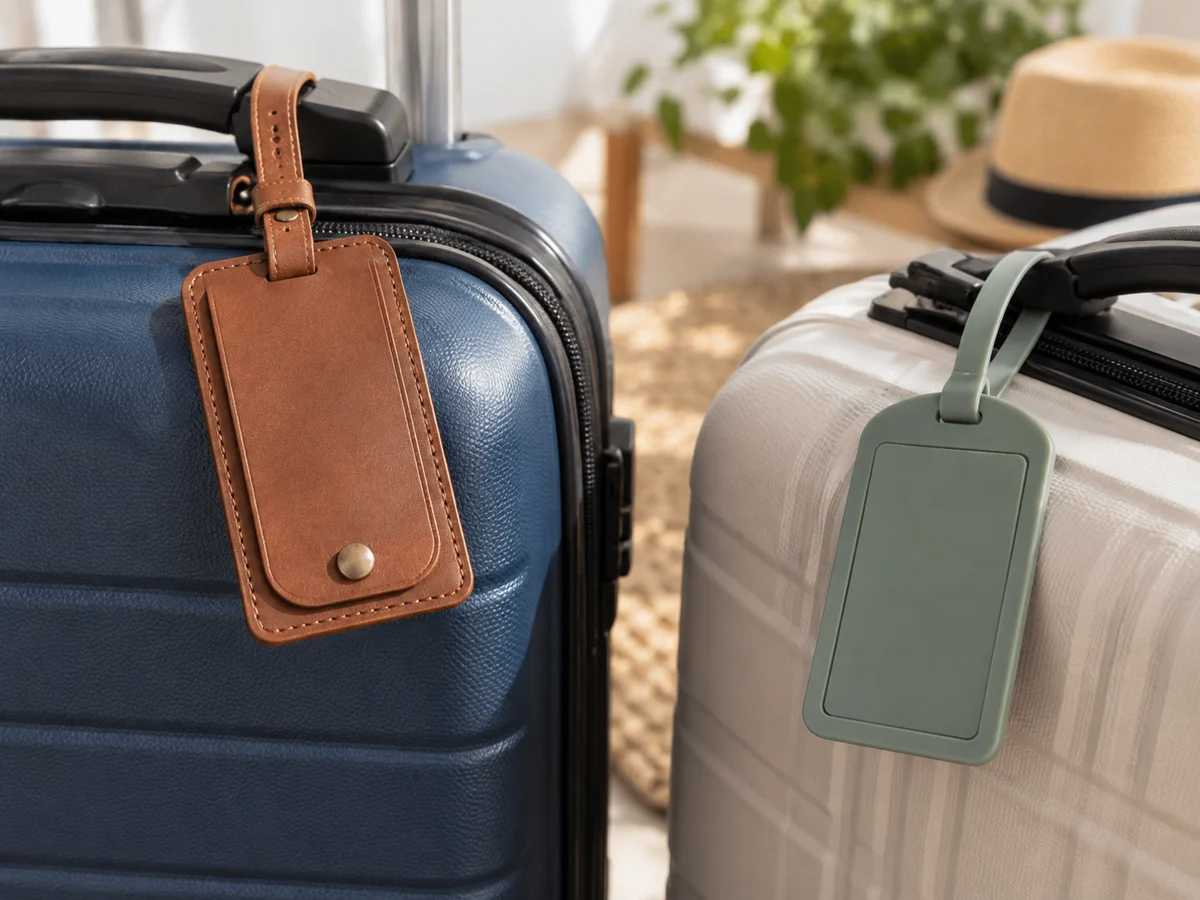
A flap or sliding cover can reduce casual visibility while allowing the information to be accessed when needed. Check that the mechanism opens easily enough for a finder and that the card does not fall out. A tiny attractive tag can make essential details hard to read. Compare the writing area, contrast and replacement-card method. A tag that requires a proprietary insert may be less convenient to update than one accepting an ordinary correctly sized card.
Inspect the attachment point
Look at the bag handle or designated loop and choose a fastening method intended for that use. Follow the tag maker's instructions rather than relying on an improvised knot or a loosely fitted strap. Check whether the fastening can be inspected and replaced if damaged. A tag should not interfere with extending handles, wheels or closures. If you use several similar bags, a distinct color or clear marker can help recognition, but it should supplement the contact information rather than replace it.
Keep identification current
Update the card before each trip and inspect its condition after handling. American Airlines recommends labeling carry-on bags in case they need to be checked, which shows why identification is useful even when you expect to keep a bag with you. Consider a suitable additional identification method inside the bag according to your preferences and carrier guidance. Digital or QR-based tags introduce their own service, privacy and access requirements, so read those terms rather than assuming a technology feature is automatically simpler.
THE USEFUL TAKEAWAY
Choose a luggage tag for readable contact details, sensible privacy and a secure intended attachment. A simple covered card may meet the need without a subscription or account. Keep the information current and follow the carrier's labeling guidance, including for cabin bags that might unexpectedly travel in the hold.
Further information
Manufacturer and official references for the details discussed. Check instructions for the exact product you are considering.