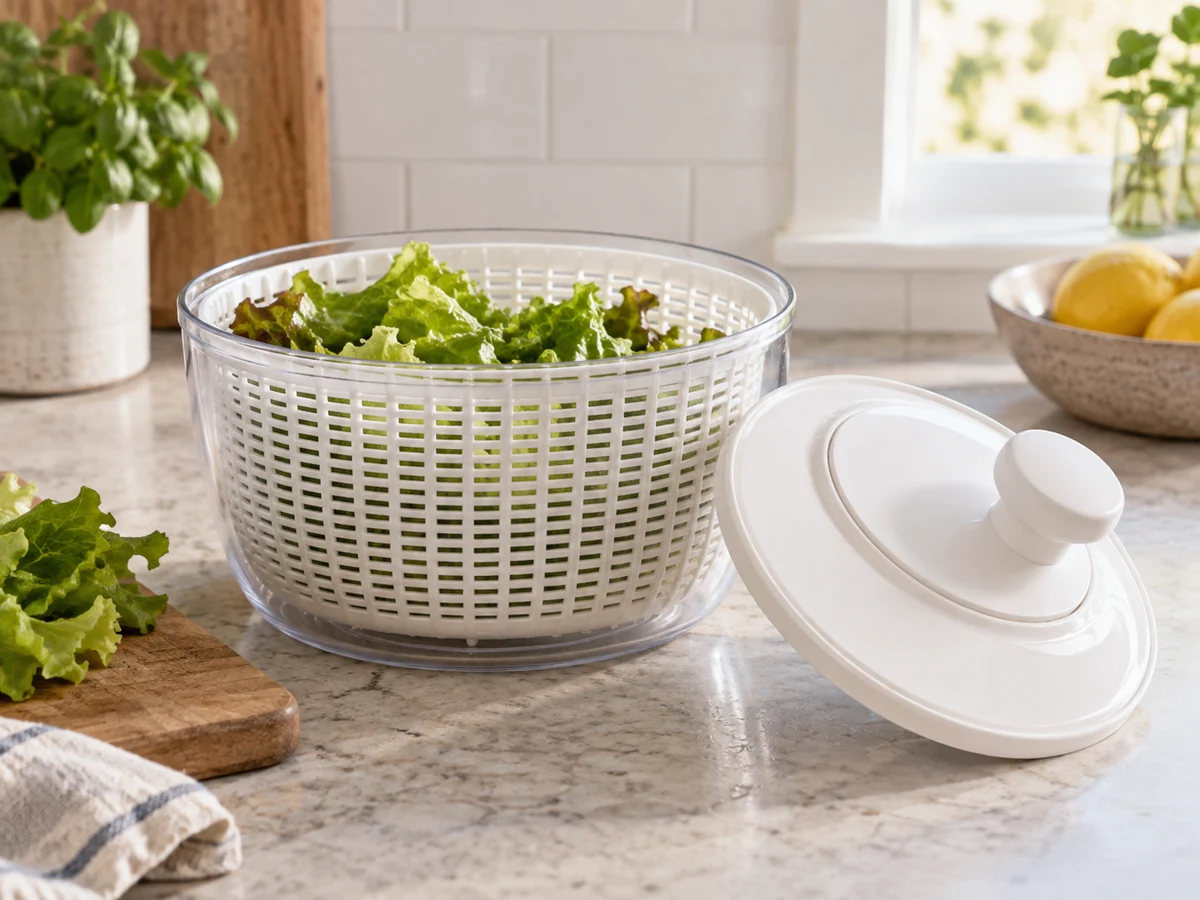
A salad spinner can be useful when washing greens is a regular part of cooking. It is also a bulky object, so the decision deserves more thought than whether it spins quickly in a demonstration. Compare the amount of leaves you normally prepare, the way the mechanism operates, and the space required by its separate pieces. A smaller spinner that handles your normal portion comfortably may be more convenient than a large one that spends most of its time obstructing a cupboard.
Estimate volume with loose leaves
Leafy ingredients take up space before they settle, so compare the basket with an actual portion rather than a serving count alone. A spinner that requires several rounds may still suit a small kitchen if those rounds are easy. A larger basket makes more sense when you regularly prepare enough greens to fill it. Check the inside dimensions where possible. The outside bowl measurement includes the gap around the basket and does not describe the entire working capacity.
Choose an operating motion
Pull cords, handles, and push mechanisms suit different grips and counter positions. Consider how much movement is needed above the lid and whether the spinner stays steady on the surface you use. A brake can help stop the basket before opening, but it adds a feature to inspect and clean. If possible, try the mechanism while the product is empty in a shop. That will not establish performance with food, but it can reveal an uncomfortable or inconvenient motion.
Open the lid before buying
The lid may be the hardest part to clean. Check whether the manufacturer provides instructions for separating any permitted components and whether rinse water can drain afterward. Do not pry apart pieces that are not intended to come apart. The bowl and basket also need room on the drying rack. A dishwasher-safe statement may apply only to selected parts, so read the component instructions. Simple access is particularly valuable when the spinner will be used several times a week.
Count only useful second jobs
Some bowls can serve at the table and some baskets can function as colanders, but check their actual suitability for those tasks. A spinner bowl may be larger than the salad bowl you prefer, and its basket may not replace a fine sieve. If these additional jobs genuinely remove other items, the stored footprint may be justified. Otherwise compare the spinner as one dedicated tool. Measure the complete stored height with its mechanism in the position the maker recommends.
THE USEFUL TAKEAWAY
A salad spinner is worth its cupboard space when it handles a recurring task without adding an awkward cleanup routine. Choose basket volume, operating motion, and accessible lid parts first. Count the bowl's additional uses only when they truly fit how you prepare and serve food.
Further information
Manufacturer and official references for the details discussed. Check instructions for the exact product you are considering.