Under-bed storage can make use of an awkward gap, but it can also turn forgotten objects into a collection that is difficult to reach. Before buying boxes, decide what belongs there and how often you need it. The useful height may vary across the bed frame, and the route out can be blocked by bedside furniture. A good container should fit the smallest clearance, open conveniently, and hold a defined group of things rather than simply absorbing whatever remains after tidying.
Measure obstacles below the frame
Check the gap at the point where the box enters, then look for center supports, legs, and other obstructions farther underneath. Use the container's full outside height, including its lid and any wheels. Floor rugs may reduce clearance in one part of the route. Measure the space beside the bed too: a long box needs somewhere to slide before you can open it. Several smaller containers can be easier to retrieve than one deep box, depending on the room layout.
Choose contents before capacity
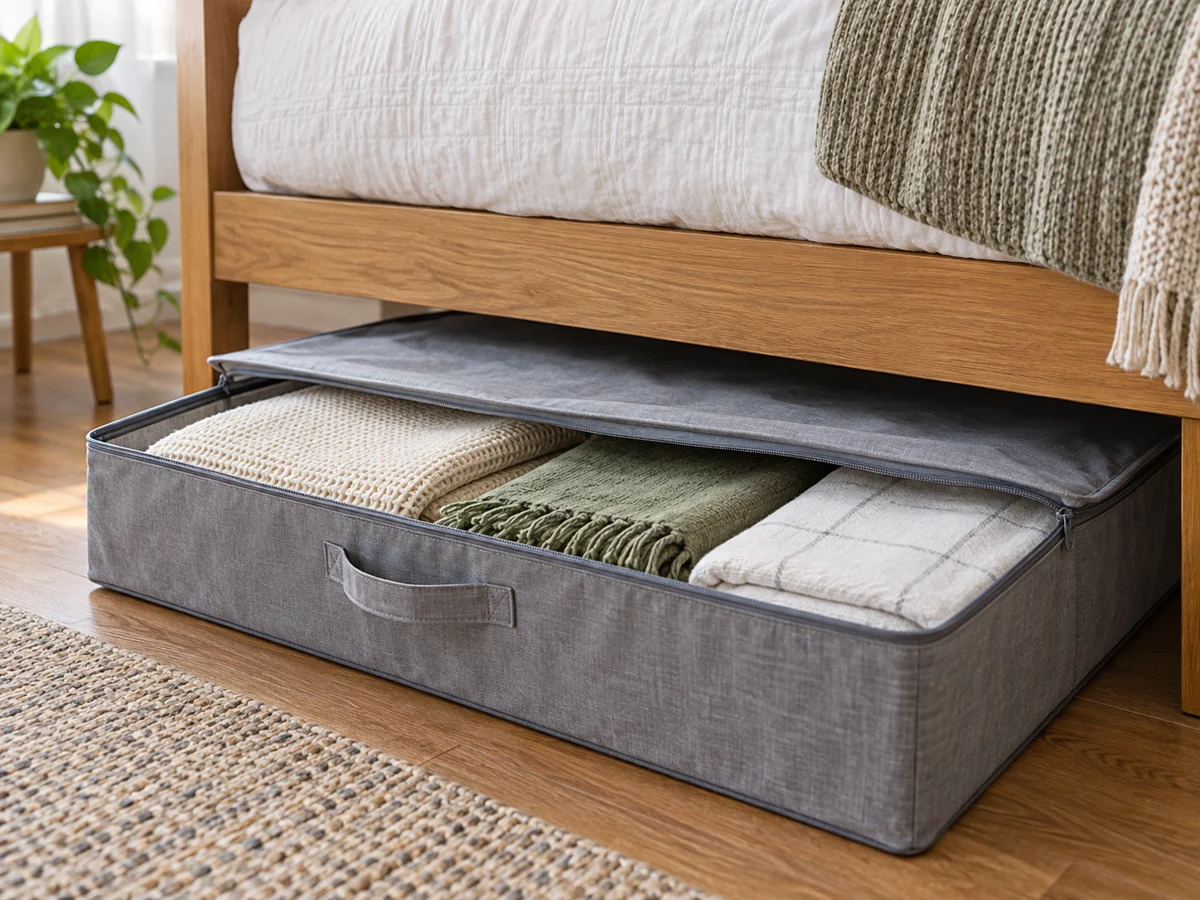
Seasonal linens, suitable spare bedding, or another clearly defined group can be easier to manage than a mixture of unrelated items. Measure the folded contents and compare them with the usable interior. Avoid treating extra capacity as a reason to keep things you no longer use. A box packed too tightly is difficult to search. If you need an item every week, consider whether a more accessible cupboard position would serve better than repeated kneeling and pulling beneath the bed.
Inspect how the lid opens
A full removable lid requires different clearance from a split or hinged opening. IKEA's SOCKERBIT under-bed box illustrates why the opening arrangement deserves attention alongside overall size. Check whether you can reach the contents without pulling the entire container into the room. Handles should remain accessible when the box is in place. Wheels may help on some floors, but they add height and need an appropriate surface. Follow the product's instructions rather than adding unapproved casters to force a fit.
Keep retrieval and cleaning visible
A label on the accessible end helps identify contents without opening every box. A simple household list may be useful if several containers hold seasonal items. Follow the contents' storage guidance and the container's care instructions; a lid does not make every environment appropriate for textiles or paper. Plan to remove the box when cleaning beneath the bed. If it is too heavy or awkward to move, the nominally efficient storage area can become a place you avoid maintaining.
THE USEFUL TAKEAWAY
Under-bed storage works best as accessible overflow for a defined group of belongings. Measure the complete route, choose a lid you can open, and keep contents identifiable. A smaller box that comes out easily can be more useful than a large one that fits only when pushed beyond reach.
Further information
Manufacturer and official references for the details discussed. Check instructions for the exact product you are considering.