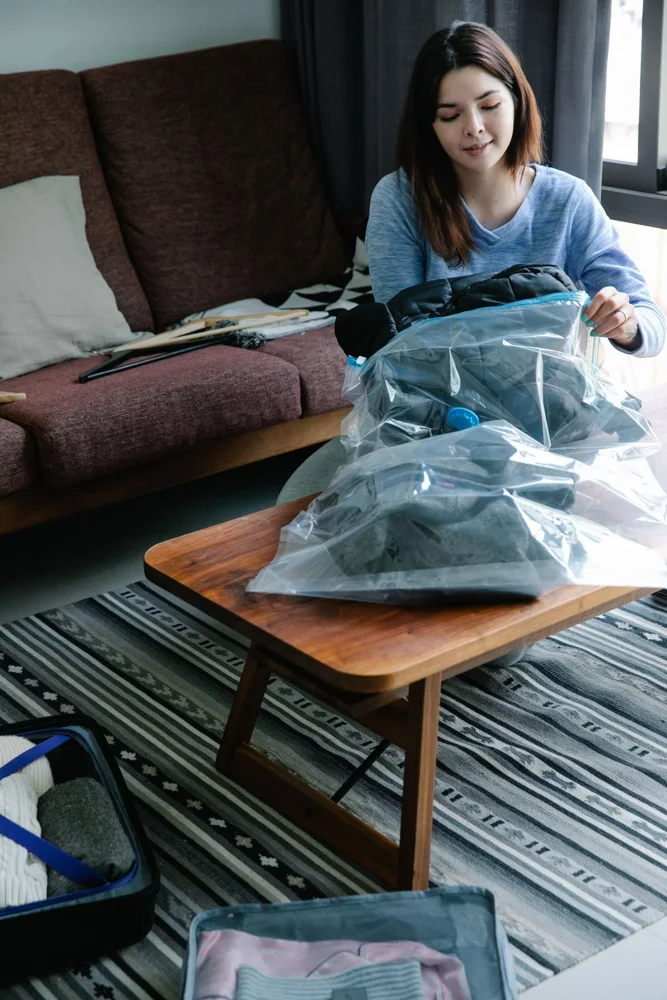
Vacuum storage bags can reduce the space occupied by some seasonal textiles, but they are not a universal answer for every blanket, coat, or pillow. The bag and the item both have instructions worth checking. Before buying a large multipack, consider what you need to store, how you will remove air, and whether the compressed package will be easy to retrieve. Space saved is most useful when the contents remain identifiable and the system can be reopened without an elaborate reset.
Check whether compression is appropriate
Read the textile maker's storage guidance before putting an item into a vacuum bag. Filled bedding, structured garments, and delicate finishes may have specific restrictions. Do not assume a bag's photograph establishes suitability for every similar item. If the instructions are unclear, ask the textile manufacturer rather than experimenting with a valuable piece. Ordinary breathable storage may be preferable for some belongings. Choose the storage method first, then the bag size, instead of working backward from a discounted assortment.
Compare the filled package with the shelf
The empty bag's length and width do not describe the final compressed shape. The contents create thickness and can leave corners or uneven sections. Measure the cupboard, shelf opening, or box where the package will sit, and allow room to grasp it. A huge bag can hold more but become cumbersome to move. Several moderate bags grouped by season or use may be easier to manage than one compressed bundle containing everything for the colder months.
Verify valve and closure operation
Check how the bag is sealed and which method removes air. A vacuum-cleaner valve needs compatibility with the intended equipment, while a hand-pump or roll-up design works differently. Read the instructions for filling limits, closure alignment, and keeping the seal clear. More clips or valves also mean more components to store and inspect. If the closure is difficult to operate comfortably, the bag may be frustrating whenever you need one item from the middle of a seasonal bundle.
Plan for reopening and inspection
Store textiles clean and dry as their own instructions require, and follow the bag maker's guidance for storage conditions. Label the accessible face with a concise contents list. Leave enough time and space for the textile's recommended preparation after removal; do not assume it is instantly ready for every use. Check the bags periodically according to their guidance and your storage routine. A pack losing compression may signal a closure or bag problem, so inspect it before repeatedly removing air again.
THE USEFUL TAKEAWAY
Use vacuum bags for suitable textiles and manageable seasonal groups. Their value depends on material guidance, a reliable closure routine, and access to the compressed package. Start with a few useful sizes, and keep ordinary storage available for items whose instructions do not support compression.
Further information
Manufacturer and official references for the details discussed. Check instructions for the exact product you are considering.