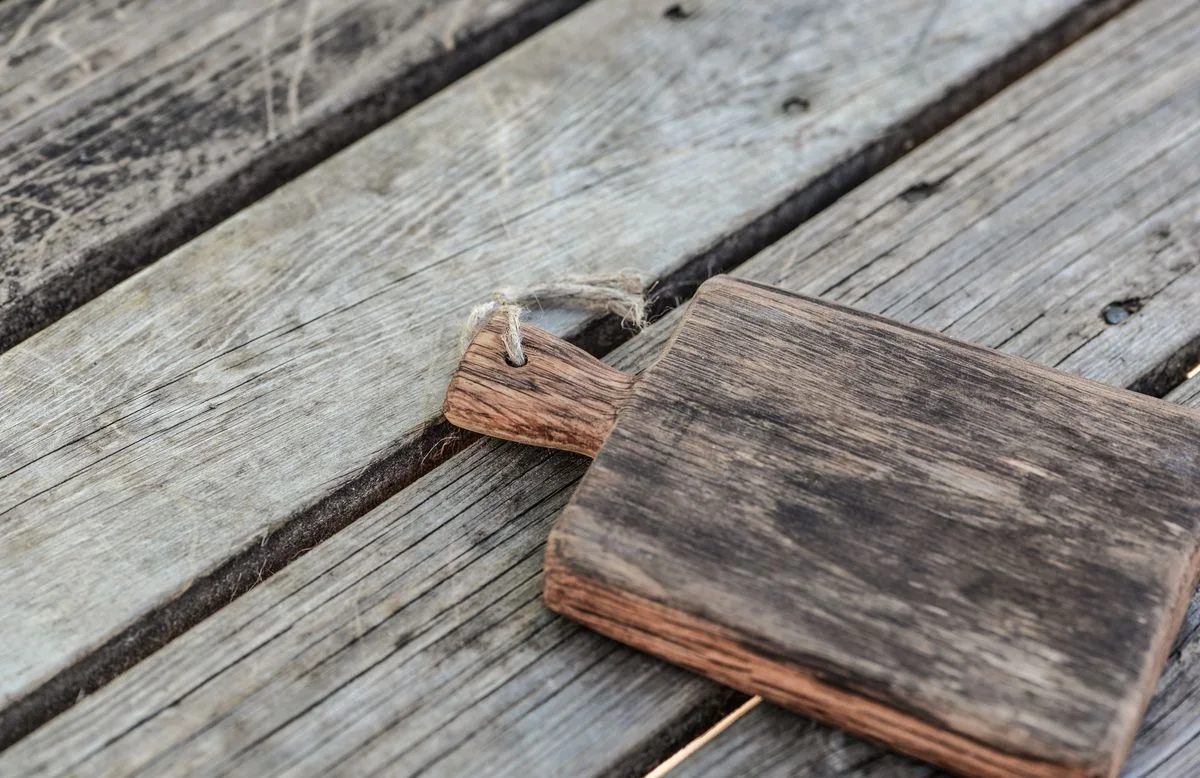
A wooden cutting board needs enough room for preparation, but it also needs to fit through the rest of your kitchen routine. Consider the route from counter to sink to drying position before choosing a thick, heavy board. Attractive grain and a generous working surface are appealing; the more practical question is whether you will comfortably wash, lift and store it after an ordinary meal. A smaller board used consistently can be a better purchase than a centerpiece that rarely leaves its display spot.
Start with the sink and the storage slot
Measure the usable counter and the sink opening, then find a place where the board can stand while drying. A board does not have to lie flat inside the sink to be washable, but you need space to turn it and rinse both faces without awkward lifting. Handles or recessed grips can matter more than decorative edging.
Use cardboard to try the size with your usual knife. Leave room for chopped ingredients as well as the ingredient you are cutting. If a board will live in a narrow cupboard slot, include its feet and handles in the thickness measurement. Check whether a juice groove or built-in tray changes the usable flat surface.
Compare construction without treating it as a ranking
Edge-grain and end-grain boards arrange the wood differently, and they can differ considerably in thickness, weight and price. Neither label tells you everything about a finished board. Look for clear construction information, smooth edges and care instructions specific to that product rather than relying on a sweeping claim that one style is always superior.
A reversible board offers two working faces, while fixed feet generally designate one side for use. Feet may improve clearance and grip, but can complicate storage or prevent flipping the board. Think about whether you value a second face more than a raised working surface.
Account for a hand-washing routine
Check the manufacturer's directions before buying. For example, John Boos instructs owners not to put its wooden boards in the dishwasher. That is a meaningful ownership requirement if your current habit is to load every preparation tool after cooking. Choose a different material if the required routine does not suit you.
Look up the recommended conditioning product and how to apply it. A care kit should solve a documented need, rather than become an automatic addition at checkout. Keep the care instructions with the purchase record so you can check them later instead of guessing from advice intended for another wood or finish.
Separate useful features from presentation extras
A groove is helpful when carving juicy ingredients, but takes space away from flat chopping. A plain surface can be easier for transferring chopped vegetables into a pan. A deep, heavy butcher-style board may be pleasant to use in a permanent preparation area yet inconvenient in a kitchen where the counter doubles as dining space.
Inspect the board when it arrives, before oiling or using it. Look for damage, rough areas and whether it sits as expected on your counter. Ask the seller about an issue while the condition can be documented clearly. Do not assume a replacement is necessary for every mark from normal use; consult the maker's maintenance guidance first.
THE USEFUL TAKEAWAY
The useful board is the one you can move, wash and dry without reorganizing the kitchen. Put fit and manageable weight ahead of a dramatic size upgrade, then choose the construction and details that suit your cooking. Include the recommended care in the purchase decision instead of treating maintenance as an afterthought.
Further information
Manufacturer and official references for the details discussed. Check instructions for the exact product you are considering.