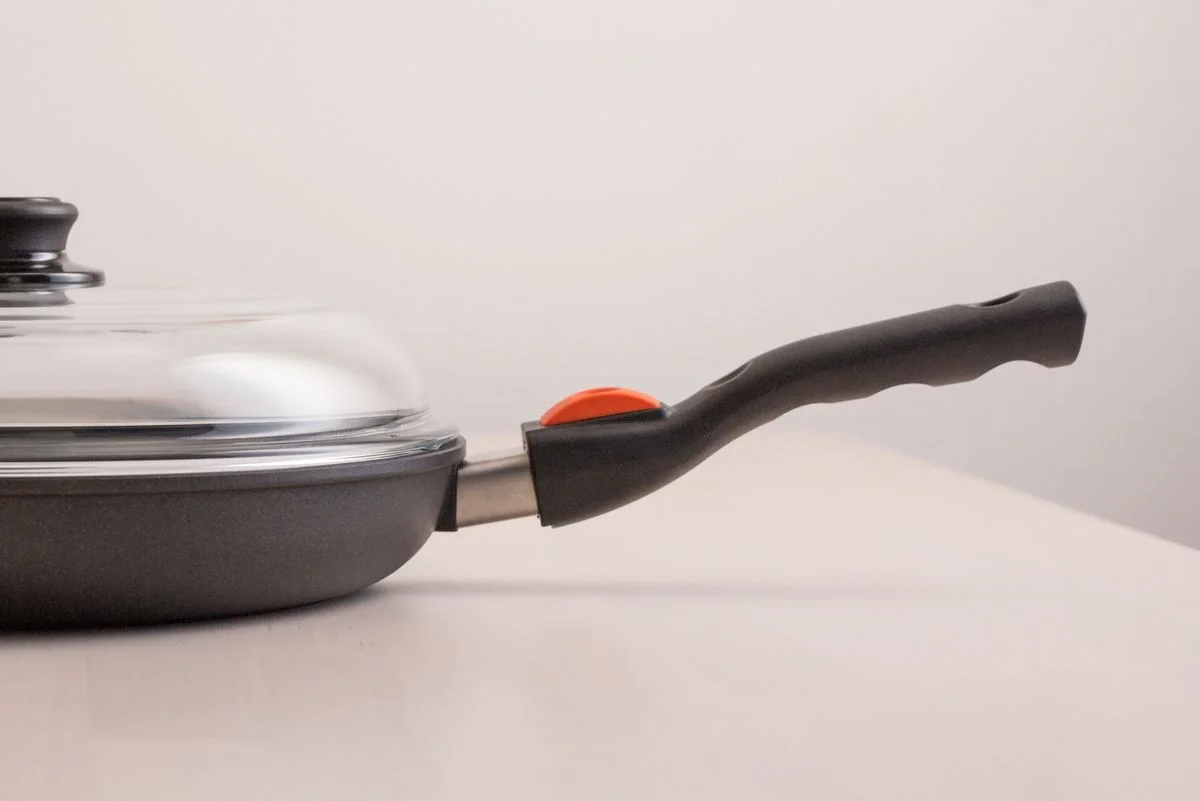
A nonstick skillet can simplify eggs, pancakes, and other foods that are awkward to release. Its value depends partly on how it will be treated and how easy it is to replace when its condition no longer suits the manufacturer's guidance. Paying more does not remove those considerations. Before choosing a skillet, decide which meals need the coating, how much cooking area they require, and whether your utensils, storage, and washing habits suit the exact surface you are buying.
Give the coating a defined job
Think about the foods for which you reach for nonstick today. If that is mostly a morning omelet, a smaller pan may serve better than a large all-purpose set. For several pancakes, base area matters more than a tall sidewall. Separating the nonstick pan's job from roasting or other demanding cooking can help you choose appropriate cookware for each task. Follow its stated heating restrictions rather than assuming it can replace every metal skillet in the kitchen.
Compare replacements, not promises
There is no reliable universal replacement interval that applies to every coating and household. Instead, read what the maker says about wear, damage, and warranty exclusions. Consider the amount you would be comfortable spending again if the pan needs replacement sooner than hoped. A costly set spreads that risk across several pieces at once. Buying a single pan also lets you change size or design later without replacing matching lids and unused pots.
Check the utensils and storage
Coated cookware may require particular utensil materials. All-Clad, for example, recommends nonmetal tools for its nonstick surfaces; use the instructions for your own pan as the authority. Look at the tools already in your drawer before adding a new set to the purchase. In a crowded cupboard, consider whether the pan can hang or sit separately. If stacking is permitted, use the protection recommended by the manufacturer and avoid resting sharp edges against the cooking surface.
Make cleanup part of the comparison
A dishwasher claim is only one part of care. Check whether hand washing is recommended for maintaining the finish, which cleaners are permitted, and whether food can collect around rivets. The pan should fit your sink without balancing on its handle. If your daily routine leaves cookware unattended until later, be honest about that habit when comparing materials. An easy-release surface is most useful when its upkeep fits the way you actually clean after cooking.
THE USEFUL TAKEAWAY
Treat a nonstick skillet as a specific working tool with a care routine and a possible replacement cost. Buy the size you use most, protect it according to its instructions, and judge a higher price by useful construction and support rather than an assumed promise of permanent performance.
Further information
Manufacturer and official references for the details discussed. Check instructions for the exact product you are considering.