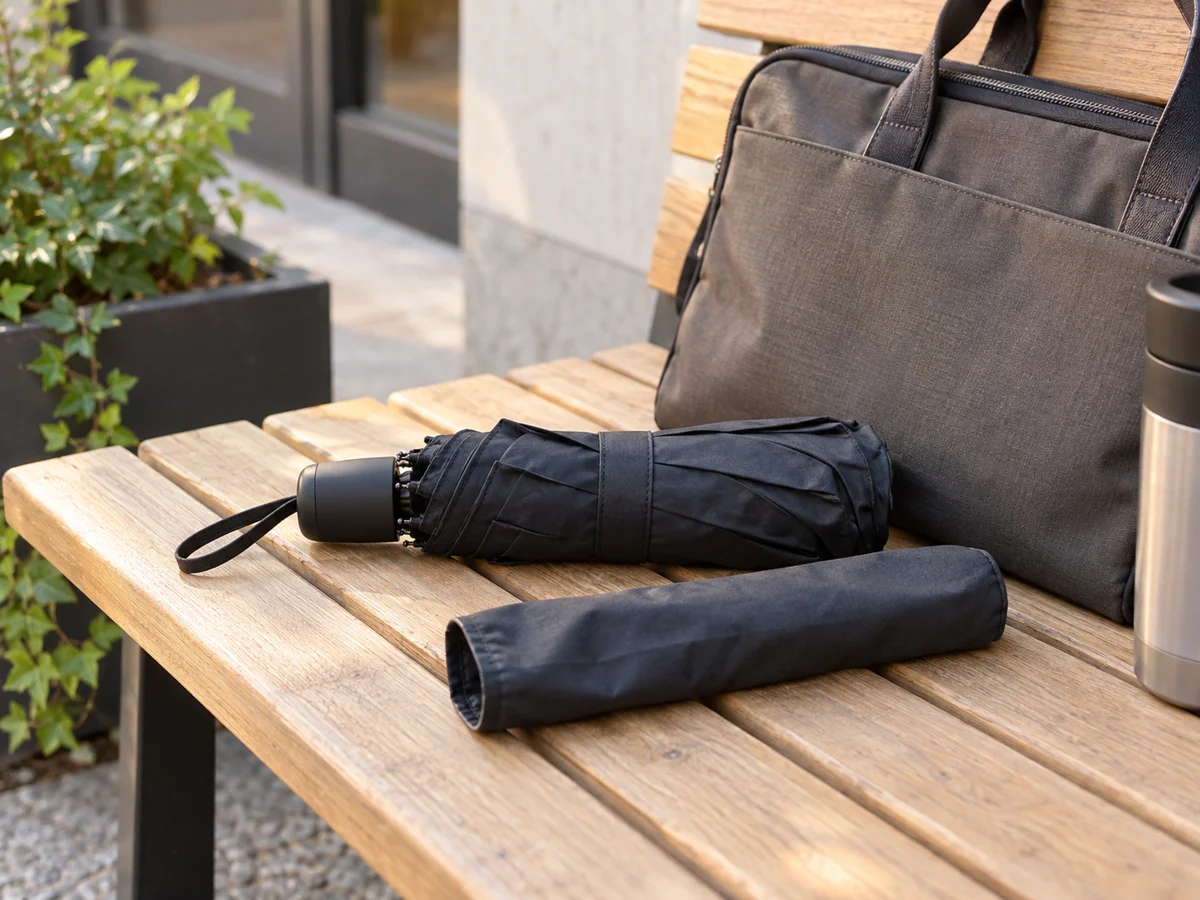
A compact umbrella has to do two jobs: cover enough of you in rain and disappear into a work bag afterwards. Those requirements compete. A tiny folded package can have a narrow canopy, while a generous canopy may involve a longer handle or more substantial frame. Consider the route from station to office, the bag opening, and where a wet umbrella will go. The best purchase is usually the smallest design that still covers your ordinary use comfortably.
Measure folded length instead of guessing
A short umbrella might still be too thick for the narrow pocket where you expect to store it. Compare folded length, maximum diameter, and the handle shape. The storage sleeve adds a little bulk and can be hard to use if it fits too tightly. If the umbrella lives in a tote, check whether its handle catches on the lining or smaller pouches. A few extra centimeters may be acceptable in a backpack but awkward in a briefcase with a fixed internal divider.
Compare usable coverage
Canopy diameter is more helpful than the number of folding sections. Think about whether a shoulder bag or backpack sits outside the covered area. A deeper canopy and a wider canopy behave differently around your field of view, so photographs showing the umbrella in use can help. Do not interpret a dramatic wind demonstration as a promise for every condition. If your commute is consistently exposed, compare the manufacturer's intended use and repair options rather than simply choosing the lightest model.
Try the opening sequence
Automatic opening can be convenient when stepping out of a doorway, but closing and compressing the shaft may still require effort. Check the complete sequence with the retailer's permission. A button should be easy to find while remaining unlikely to be pressed inside the bag. Consider the grip with the gloves you normally wear. A wrist strap helps keep the umbrella close, but it does not compensate for a handle that feels insecure or uncomfortable during the entire walk.
Plan a place for drying
The sleeve is for carrying, not a reason to keep the canopy tightly wrapped while damp. BLUNT's care guide advises drying its umbrellas completely before storage. Follow the specific instructions for your model and identify a suitable place at work or home. A spare waterproof pouch can isolate a temporarily wet umbrella from paperwork, provided it is removed for drying later. Check whether a damaged canopy, tip, or mechanism can actually be repaired locally before paying more for a repairable design.
THE USEFUL TAKEAWAY
Choose an umbrella by coverage, folded shape, and the complete opening sequence. A slightly larger model that you can grip and pack easily may be more useful than the smallest option. Budget for care and realistic repair access, and make drying part of the routine that protects your purchase.
Further information
Manufacturer and official references for the details discussed. Check instructions for the exact product you are considering.