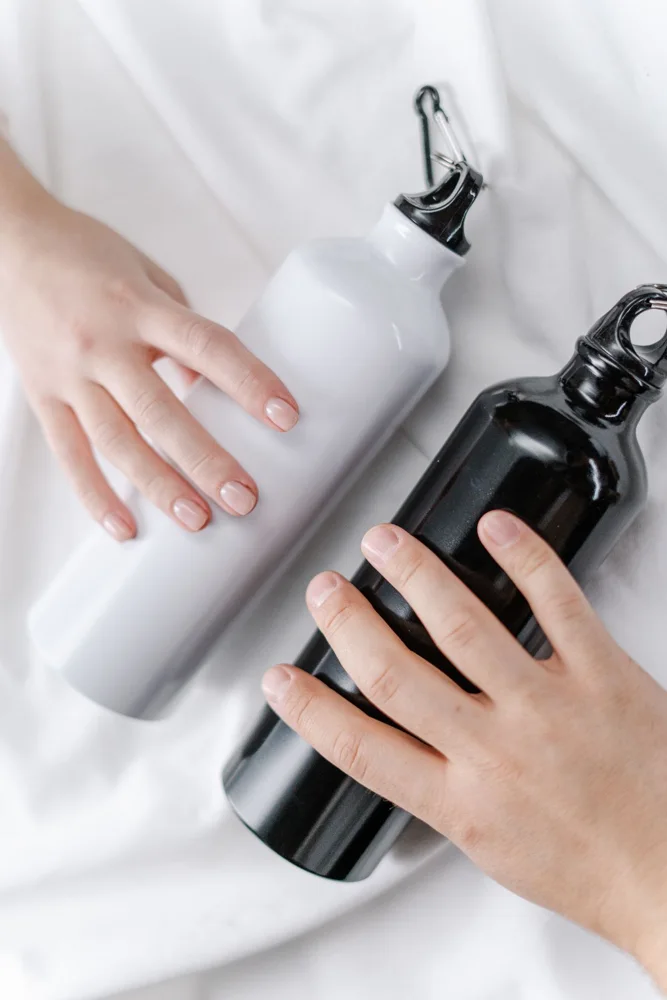
The ideal commuter water bottle fits a bag, opens predictably, and can be cleaned at the end of an ordinary day. Capacity is an obvious comparison, but a bottle that holds more water also takes up more room and becomes heavier when filled. A large insulated model may be unnecessary when refilling is easy at work. Start with the length of your commute, available refill points, and the place the bottle will ride, then compare designs around those practical limits.
Measure the pocket, including its opening
A backpack's bottle pocket may stretch around a wide base but fail to hold the bottle securely higher up. Measure the opening and usable depth, then compare the widest point of the bottle, including its lid. If you carry it inside a bag, consider how it sits next to a laptop sleeve and lunch box. A handle can help with carrying but can also catch on pockets. Check whether the lid adds height beyond the dimensions shown for the bottle body.
Decide where you will open it
A screw cap suits deliberate drinking at a desk, while a flip lid can be easier when one hand is occupied. A straw introduces another component to wash and replace. Look at how the drinking surface is protected inside a crowded bag and whether a lock is separate from the opening button. Read the maker's statements about upright use, bag carrying, and permitted drinks. Do not treat an open straw tumbler as interchangeable with a bottle expressly intended for closed transport.
Inspect the small parts
The bottle body is often easier to wash than the lid. Thermos's cleaning guidance highlights separate attention for lids, seals, and straws. Before buying, find the disassembly instructions and see whether the components can be reached with the brushes you already own. A tiny removable seal is useful only if it can be put back correctly. Check whether replacement caps or seals are available for the exact model, and account for their delivered cost before paying a premium for repairability.
Spend on the feature your day requires
Insulation is attractive when you prefer a drink to stay cool during a long journey, but it adds bulk compared with some single-wall designs. Compare filled carrying weight rather than empty weight alone. A narrow mouth can be pleasant for drinking yet awkward for ice or cleaning. A wide mouth solves those problems but may need a different lid for drinking on the move. Choose one routine and support it well, instead of accumulating several bottles that each solve a minor version of the same problem.
THE USEFUL TAKEAWAY
The best commuter bottle is the one that fits the route and gets cleaned consistently. Match capacity to refill access, check the complete lid assembly, and evaluate the bottle when full. Accessible seals and a suitable closure can matter more than a large capacity or an impressive collection of interchangeable accessories.
Further information
Manufacturer and official references for the details discussed. Check instructions for the exact product you are considering.