A kitchen scale can make baking measurements easier to repeat, but its practical usefulness depends on more than the number of units displayed. The bowl has to fit without hiding the screen, the controls should be usable with flour on your fingers, and the maximum load must include everything on the platform. Begin with the recipes and mixing bowls you already use. That approach makes it easier to recognize features that help and features that simply add another button.
Separate capacity from resolution
Maximum capacity describes the load the scale can accept, including the bowl. Display resolution describes the increments it shows; it does not by itself establish measurement accuracy. Check both figures in the specifications, then compare them with your normal recipes. A scale suited to a large dough mixture may not be intended for tiny quantities of yeast or spice. If small measurements matter, look for explicit manufacturer guidance rather than assuming an extra decimal place guarantees the result.
Check screen visibility with your bowl
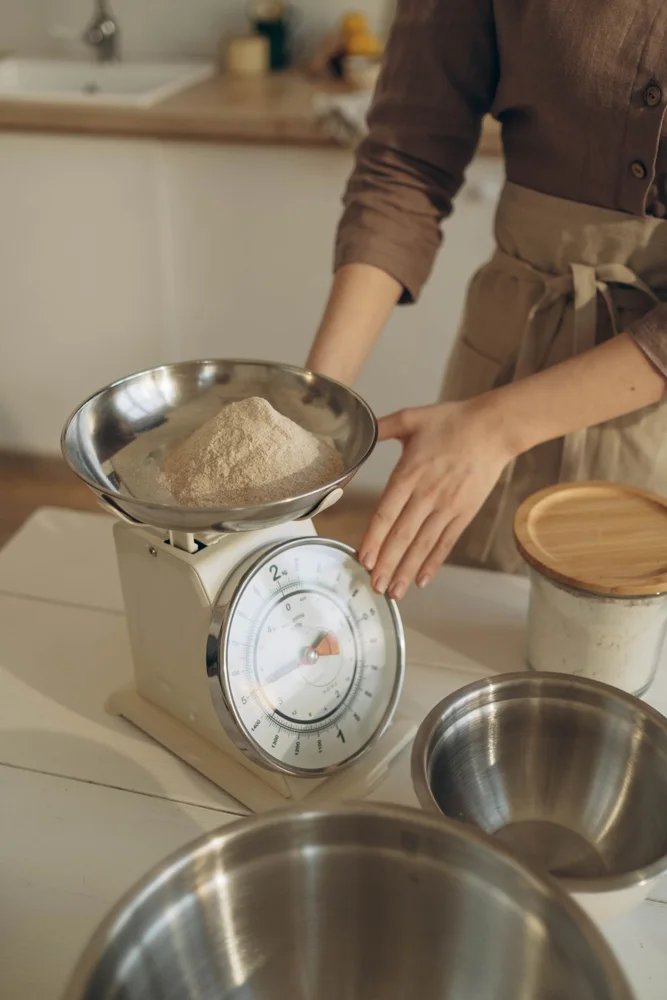
Put your widest bowl beside the scale's stated platform dimensions. A screen close to the platform can disappear beneath an overhanging rim. Some designs extend the display, while others leave more space in front. Either arrangement needs a place on your counter. Consider whether the bowl remains stable and whether its base presses against controls. A useful shop comparison is to imagine your normal mixing bowl on each model, not just the small ingredient shown in a product photograph.
Use the tare function deliberately
Tare lets you return the display to zero with a container or previous ingredient on the platform. That can reduce the number of bowls used, but it does not erase the scale's physical load limit. Check whether automatic shutoff gives enough time for your working pace and whether the display can be recovered after a pause. Keep a written recipe nearby so that weighing several ingredients into one bowl does not make it easy to lose your place.
Make repeatability a routine
Use the scale on the stable surface specified in its instructions, and follow its cleaning and battery guidance. A platform with awkward seams may collect flour where it is difficult to wipe. King Arthur recommends weighing baking ingredients and using the weights supplied in the recipe; an ingredient chart can help when only volume is given. Consistency also comes from using the same recipe reference, not switching between unrelated cup-to-weight conversions halfway through a bake.
THE USEFUL TAKEAWAY
Choose a scale around your bowl, batch size, and pace of baking. Capacity, resolution, and screen placement answer different questions, so compare them separately. A clear display and a dependable weighing routine can be more useful than a long list of specialized modes you rarely need.
Further information
Manufacturer and official references for the details discussed. Check instructions for the exact product you are considering.