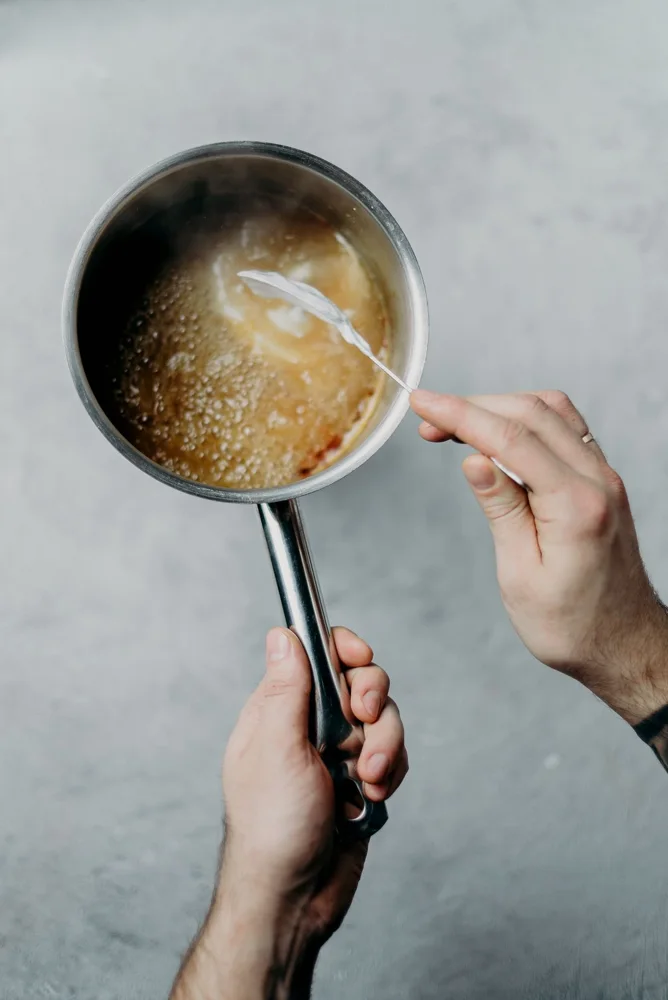
Cooking for one or two people often reveals the inconvenience of an oversized saucepan: a small sauce spreads thinly across the bottom, the handle crowds the stove, and washing takes more room than the meal. Yet the smallest option is not automatically versatile. Start with the quantities you make most often and leave room for stirring. A useful saucepan should work for a breakfast portion, a vegetable side, or a sauce without feeling cramped or unnecessarily bulky.
Use a real portion as your reference
Measure a familiar quantity in a container you already own, then compare that with the saucepan's stated capacity. Remember that brimful capacity leaves no working space for stirring or bubbling. Tall sides can keep a compact footprint, while a broader base may suit reductions and whisking. Neither shape is universally better. List two or three regular recipes and decide which geometry serves them before choosing a size for an occasional large meal.
Look at the bottom and the corners
A flat base should suit the burner and the hob manufacturer's size guidance. Inside the pot, rounded transitions between base and sides can be convenient for a whisk or spoon. Very tight corners deserve a closer look if you make thick sauces. Check whether your existing utensils reach the bottom without an awkward angle. A pot that works with the tools you own can save both drawer space and the expense of buying a special small whisk.
Pouring deserves a trial motion
Imagine lifting the saucepan by its handle and pouring into a mug or bowl. Balance, lip shape, and the position of your wrist all matter. A pouring spout may help with your routine but can affect how a lid seals. Straining lids introduce another detail to clean and may require a particular pouring direction. Review instructions for locking or holding the lid rather than assuming every fitted lid is designed to stay in place while draining.
Buy one piece with a useful lid
A large cookware set may include several similar small pots and still omit the size you prefer. Compare an individual saucepan with a lid that fits properly and is easy to store. If it will go into the oven, confirm limits for the handle and lid separately. Care instructions vary by construction, even within a material family. Check sink fit and dishwasher guidance so that a small meal does not leave an unexpectedly inconvenient cleanup task.
THE USEFUL TAKEAWAY
For a small household, the best saucepan is the one that handles normal portions without wasting stove or sink space. Choose its shape around your cooking, inspect pouring and stirring access, and consider buying a single useful piece before committing to a matching set.
Further information
Manufacturer and official references for the details discussed. Check instructions for the exact product you are considering.