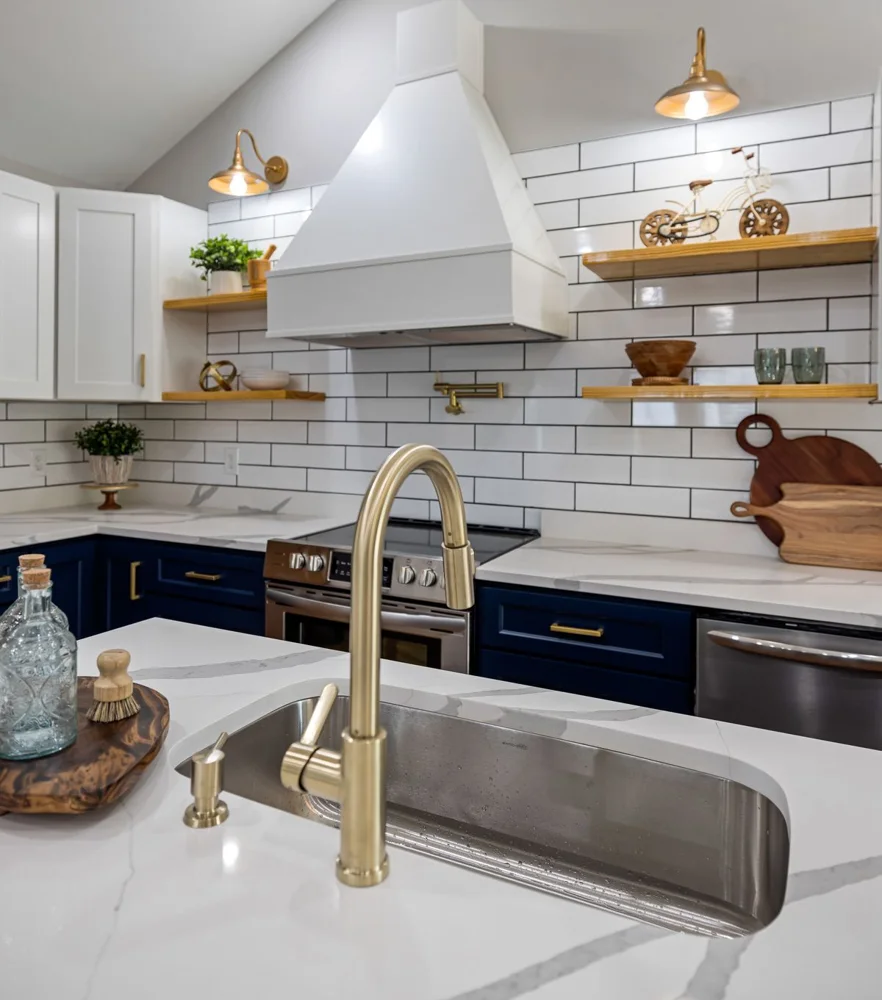
Open shelving can make frequently used objects easy to reach, but its usefulness depends on what will sit there and how the shelves are supported. A styled photograph rarely shows the weight of everyday dishes, books, or storage boxes. Begin with those contents and their dimensions, then choose shelf depth, spacing, and installation accordingly. The arrangement should leave objects visible and accessible without making cleaning or the surrounding room more awkward. More shelf area is not always the same as better storage.
Choose contents that benefit from access
Objects retrieved every day can justify an open position, while seldom-used items may be easier to keep in closed storage. Group the intended contents and measure their depth and height. A very deep shelf can hide a second row behind the first, undermining easy access. A shallow shelf may leave large objects projecting beyond the intended surface. Decide whether the display will hold individual items or baskets, since baskets change both the useful dimensions and the effort of retrieving contents.
Read the complete load guidance
Check the stated limit and any conditions on load distribution, bracket arrangement, and wall type. IKEA's shelf instructions illustrate that installation details can affect the permitted use. A shelf board's material alone does not establish the capacity of the mounted system. Use appropriate hardware according to the product and wall guidance, and seek suitable help if the fixing method is uncertain. Do not assume that adding another bracket or using larger screws automatically creates a higher verified load limit.
Plan spacing around removal
Measure the clearance needed to lift an object, tilt a storage box, or grasp a handle, not just the height of the object sitting still. Adjustable shelves can help when contents change, but the available positions and support instructions matter. Consider where the shelf edge falls relative to a desk, seat, or walkway. A wall arrangement can preserve floor area while still protruding into head or shoulder space. Mark the proposed dimensions before ordering several matching shelves.
Keep the arrangement maintainable
Open surfaces need accessible cleaning, and many small decorative objects can make that task slower. Choose a manageable number of groups and leave space to lift them out. Read care instructions for the finish and avoid assuming that a shelf intended for one environment suits a damp or outdoor location. If your storage needs are unsettled, install a modest initial arrangement rather than filling the whole wall. Living with the first shelves can reveal which depth and spacing genuinely help.
THE USEFUL TAKEAWAY
Open shelving works when its contents, dimensions, and support system are planned together. Choose enough depth for the objects you use, leave removal clearance, and follow the exact installation guidance. A modest, accessible arrangement can be more useful than a full wall of shelves that is difficult to maintain.
Further information
Manufacturer and official references for the details discussed. Check instructions for the exact product you are considering.