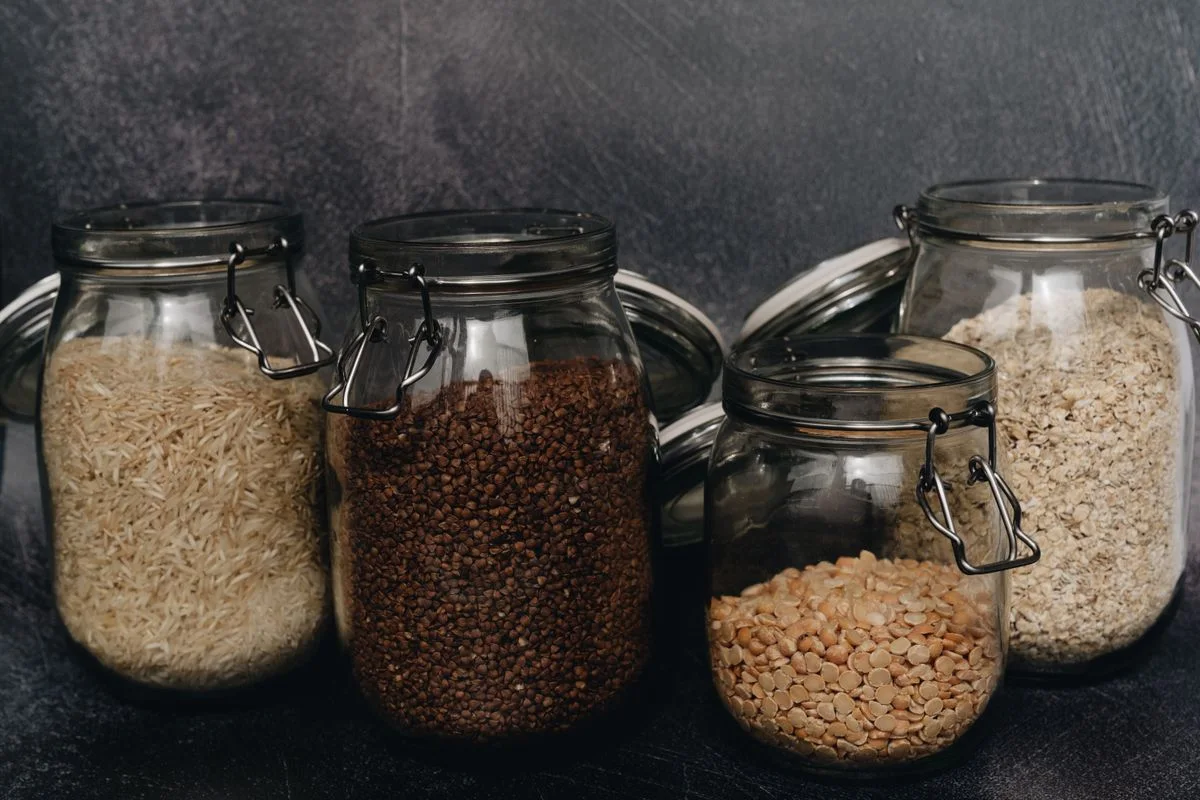
Pantry canisters are often bought as a matching set before anyone checks what must fit inside them. That can leave a little flour in its original bag, a tall pasta container on the wrong shelf, and several empty small jars. Begin with the packages you buy regularly and the shelves where they live. A practical system should make refilling and measuring straightforward, while preserving the information you need from the packaging and avoiding unnecessary containers for rarely used ingredients.
Compare volume with a real refill
Package weight and container volume are different measurements. Flour, pasta, and other dry ingredients do not occupy the same space for a given weight. Use an existing measured container or the manufacturer's ingredient-specific guidance to estimate the fit. Allow for the amount left when you open a new package; a canister that holds exactly one full bag may still create a partial refill problem. Buy around regular purchase sizes rather than treating every canister in a set as equally useful.
Measure the working opening
A canister may have enough capacity but an opening too narrow for your scoop. Compare the lid aperture with the measuring tool you actually use. A deep, slim shape can be difficult to reach near the bottom, while a broad container uses more shelf width. Check whether the lid opens upward, lifts off, or needs clearance to operate. The shelf height should allow normal use, not merely fit the closed container in a product diagram.
Assess lids as separate mechanisms
Push buttons, clips, and gaskets add different cleaning requirements. Read the directions for disassembly and drying, and confirm which components are intended to come apart. OXO's instructions for its POP products, for instance, include specific handling guidance rather than treating the lid as a carrying handle. Use the instructions for the exact line you buy. A clear replacement-parts policy is useful, but only when it identifies the component that fits your container.
Keep the pantry system flexible
Ingredient habits change, so permanent labels and tightly packed racks can become inconvenient. Consider labels that can be updated and a few repeatable container footprints. Preserve relevant package dates, ingredient identity, and any instructions when decanting. Some foods may be easier to keep in their original bags inside a larger organizer. That arrangement can avoid partial-refill clutter and extra washing. A pantry does not need every package hidden to be orderly and efficient during cooking.
THE USEFUL TAKEAWAY
Choose pantry canisters around the ingredients and bags you actually buy. Capacity, opening width, and lid access matter more than a perfectly matched shelf. Start with the few ingredients that benefit most, and keep the arrangement flexible enough to change when your cooking or shopping habits do.
Further information
Manufacturer and official references for the details discussed. Check instructions for the exact product you are considering.