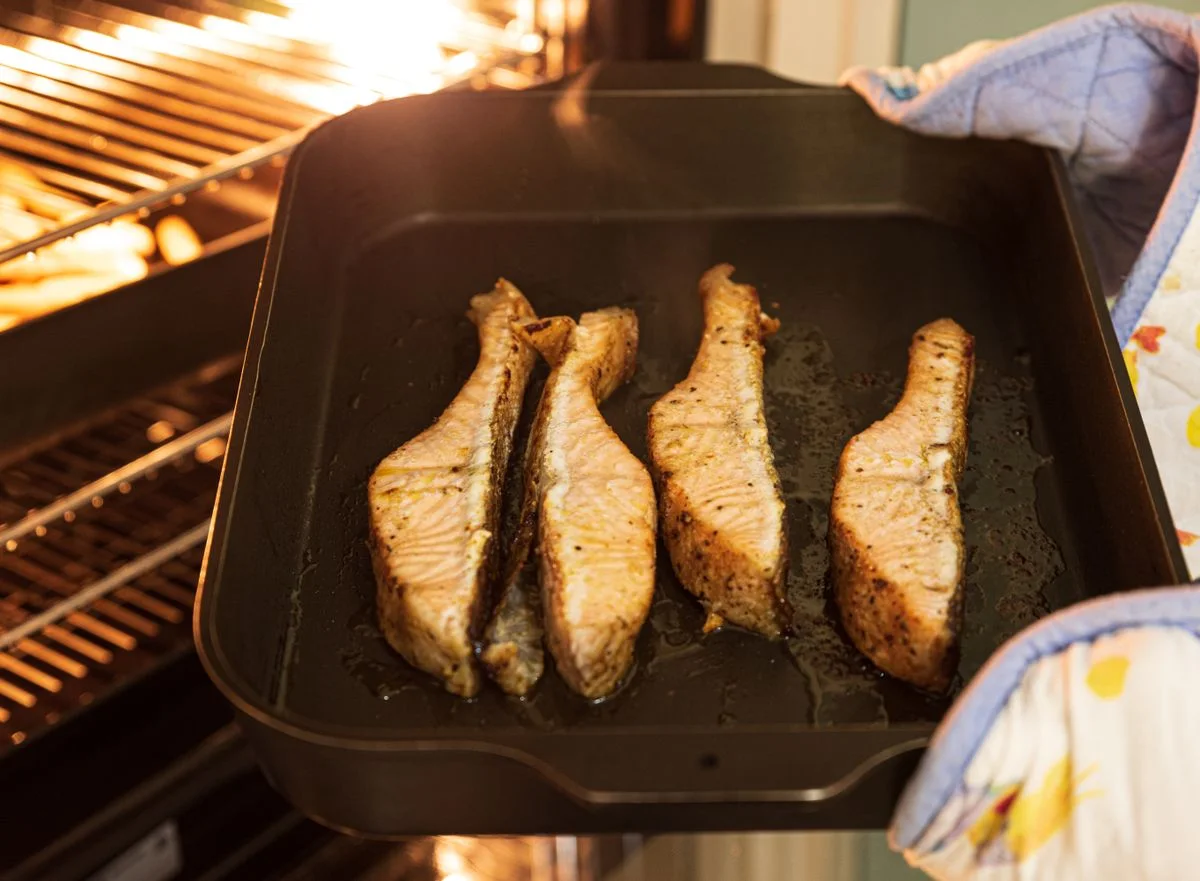
A roasting tin can look generous until its sloping sides, raised handles, or fitted rack leave little room for dinner. Its advertised volume is less useful than the space available for the ingredients you cook together. Think about a normal roast with vegetables, or a tray of vegetables alone, and compare the flat floor those foods need. The right tin should also be straightforward to lift, serve from, and wash after the meal is finished.
Draw the meal, not the catalogue outline
Use the dimensions of your current food arrangement as a starting point. A broad base may suit a spread of vegetables, whereas deep sides can be useful for a recipe with liquid. These are different priorities, so a large capacity figure does not settle the choice. Check the internal floor measurements and the angle of the sides. Rounded corners are usually easy to reach with a spoon, while a steep wall may require a different serving motion.
Account for the rack
A removable rack can lift food above the base, but it also changes the available height and the way ingredients fit underneath. Confirm whether you will use it for your normal recipes. Inspect how it is lifted and where it will rest after cooking. A rack that is awkward to clean or store may become an unused accessory. Buying the tin and rack separately can make sense when the bundled shape does not match what you cook.
Check handles in the oven doorway
Fixed handles increase the outside footprint; folding handles may behave differently when you grasp them. Measure their widest position and consider the grip with gloves. Check that the complete tin fits the oven rack with the clearances the appliance requires. If you intend to make gravy on the hob, verify that the roasting tin is expressly suitable for that use and your hob type. Oven suitability alone does not establish stovetop compatibility for every material.
Think through serving and cleanup
A heavy tin loaded with food may be better served near the cooker than carried across the room. Plan a suitable heat-resistant resting place and assess whether your serving utensils reach the corners. Cleaning requirements depend on the finish; consult the product instructions before soaking or using abrasives. The sink and drying rack need to accept the tin's full outside dimensions. Those practical checks are particularly worthwhile when a deep festive roaster will spend most of the year in storage.
THE USEFUL TAKEAWAY
Choose a roasting tin by usable base space, handle clearance, and the meals you prepare repeatedly. A rack is valuable when it serves a real recipe. The best bargain is a tin you can maneuver and clean comfortably, rather than the largest vessel that technically fits the oven.
Further information
Manufacturer and official references for the details discussed. Check instructions for the exact product you are considering.