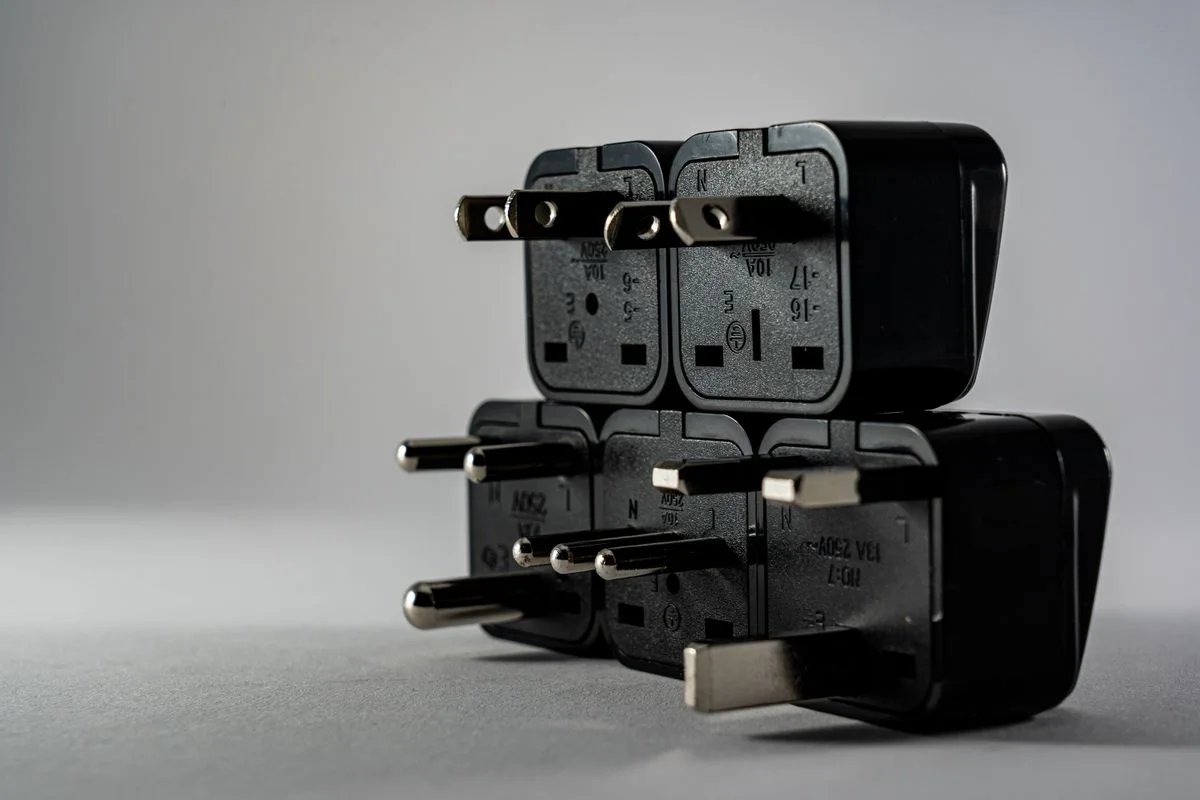
A travel adapter earns its place in a bag by connecting the equipment you actually carry to the sockets you will encounter. A large collection of sliding plugs can look reassuring while leaving important questions unanswered: whether the adapter accepts your charger, whether an earth connection is maintained, and whether its USB output suits your devices. Start with an inventory of chargers and destinations. That usually produces a smaller, more useful shortlist than searching for the adapter with the most countries printed on its packaging.
Read the equipment label first
A plug adapter changes the physical connection; it does not necessarily change the electricity supplied. SKROSS explicitly distinguishes its travel adapters from voltage converters. Read the input voltage and frequency printed on each power supply, then compare them with the destination supply and the adapter instructions. Do not assume a hair appliance accepts the same range as a phone charger. If the label is unreadable or compatibility remains uncertain, resolve that with the equipment manufacturer before purchasing an adapter.
Match both ends of the connection
Check the plug coming from your device as carefully as the socket at your destination. Product photographs sometimes show several destination pins but conceal the receiving face. Equipment with an earth pin needs a compatible solution that maintains the required connection, rather than a convenient opening that merely accepts the plug. Read the manufacturer's destination list for the exact model and itinerary, including stopovers. A compact adapter for a regular destination may be more convenient than a bulky universal design.
Separate USB charging from the mains socket
An adapter with USB ports combines two decisions in one purchase. Check the connector type, supported charging protocol, and output available when several ports are used together. A headline output figure may describe one port or a shared total. Compare that information with the requirements of your phone, tablet, and laptop. If you already own a suitable multiport charger, a plain plug adapter may avoid duplicating it. Remember that the adapter body and the charger must fit the same outlet space.
Think about a hotel bedside outlet
A heavy block can be awkward beside furniture or in a recessed socket. Look at pin orientation, body depth, and how a cable exits once connected. Photograph the complete proposed arrangement on a table to judge its bulk. Check the adapter's load rating and instructions; extra sockets do not create unlimited capacity. A model with replaceable components is useful only if the specified replacements are obtainable. Keep the instructions available offline so an unfamiliar outlet does not become an improvised compatibility test.
THE USEFUL TAKEAWAY
Buy the adapter around a verified equipment list and itinerary. The best value may be a simple destination adapter used with a charger you already own. Resolve voltage, earthing, output, and physical fit before comparing convenience features; a broad country count cannot answer those questions for you.
Further information
Manufacturer and official references for the details discussed. Check instructions for the exact product you are considering.