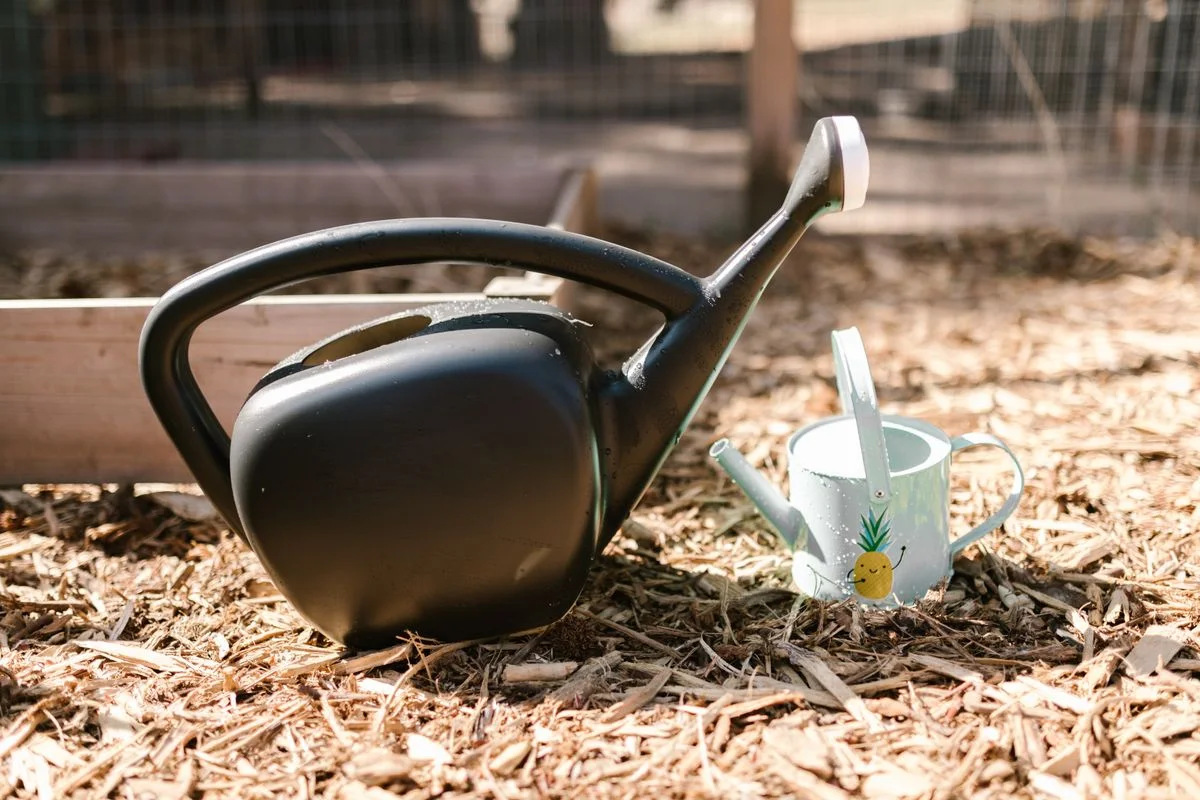
An indoor watering can should make it easy to deliver water where you intend and carry it without an awkward spill. A very large can reduces refill trips but becomes heavier and harder to guide between leaves. A decorative miniature may look right on a shelf while needing repeated refilling for a modest plant collection. Choose around the number and position of your plants, the sink used for filling, and the space available for storing the can between watering sessions.
Match capacity to the route
Count the plants you tend in one round and consider how far you carry the water. You do not need to select a can that holds everything at once. A manageable smaller load can be more convenient than a full large can carried through several rooms. Try the handle with the retailer's permission and consider how its position changes the balance as the can empties. Check whether there is a second gripping point if you prefer to guide the pour with both hands.
Look at the spout from the plant's perspective
A long narrow spout can reach a pot beneath leaves, but it adds length to the stored can. A short wide spout is easier to tuck away but may be less precise in a crowded plant arrangement. Consider whether a removable rose is useful for the tasks you perform; the RHS describes gentle rose watering for delicate seed-sowing situations. That does not make it necessary for every indoor pot. A plain controlled pour may be simpler for your established plant collection.
Check filling and emptying
Measure the opening under your tap and look at where the handle sits. A can that cannot be tilted comfortably beneath the faucet creates a problem before watering begins. Check whether the opening accepts a cleaning brush and whether the last water can be emptied without an elaborate maneuver. A transparent or readable level mark can help with consistency, but it should remain visible while the can is being filled. Avoid paying for decorative features that obstruct the opening or make the body difficult to inspect.
Plan for the resting place
Consider the can's full footprint, including the spout, rather than just the body diameter. If it stands on a finished surface, use an appropriate place or tray and follow the product's care instructions. Inspect joints and seams when the can arrives before relying on it beside furniture. Materials have different stated care requirements, so check the exact finish rather than assuming every metal can behaves the same. A can that is easy to empty, clean, and put away supports a simpler routine than one selected mainly as decoration.
THE USEFUL TAKEAWAY
The best indoor watering can balances a controllable pour with easy filling and storage. Buy around your plants and sink, not the largest stated capacity. A comfortable handle, suitable spout, and accessible opening can make a simple can more useful than a decorative design that complicates each watering session.
Further information
Manufacturer and official references for the details discussed. Check instructions for the exact product you are considering.