A bathroom bin spends most of its time in a small gap, yet it still needs room to open, accept waste, and be emptied. A slim body can hide an inconvenient lid or a liner that catches when removed. Start with the available position and the volume your household actually produces between emptying. Then compare the opening method, inner bucket, and cleaning access. A straightforward bin that is easy to service can be more useful than a larger one with a complicated lid.
Measure the bin in use
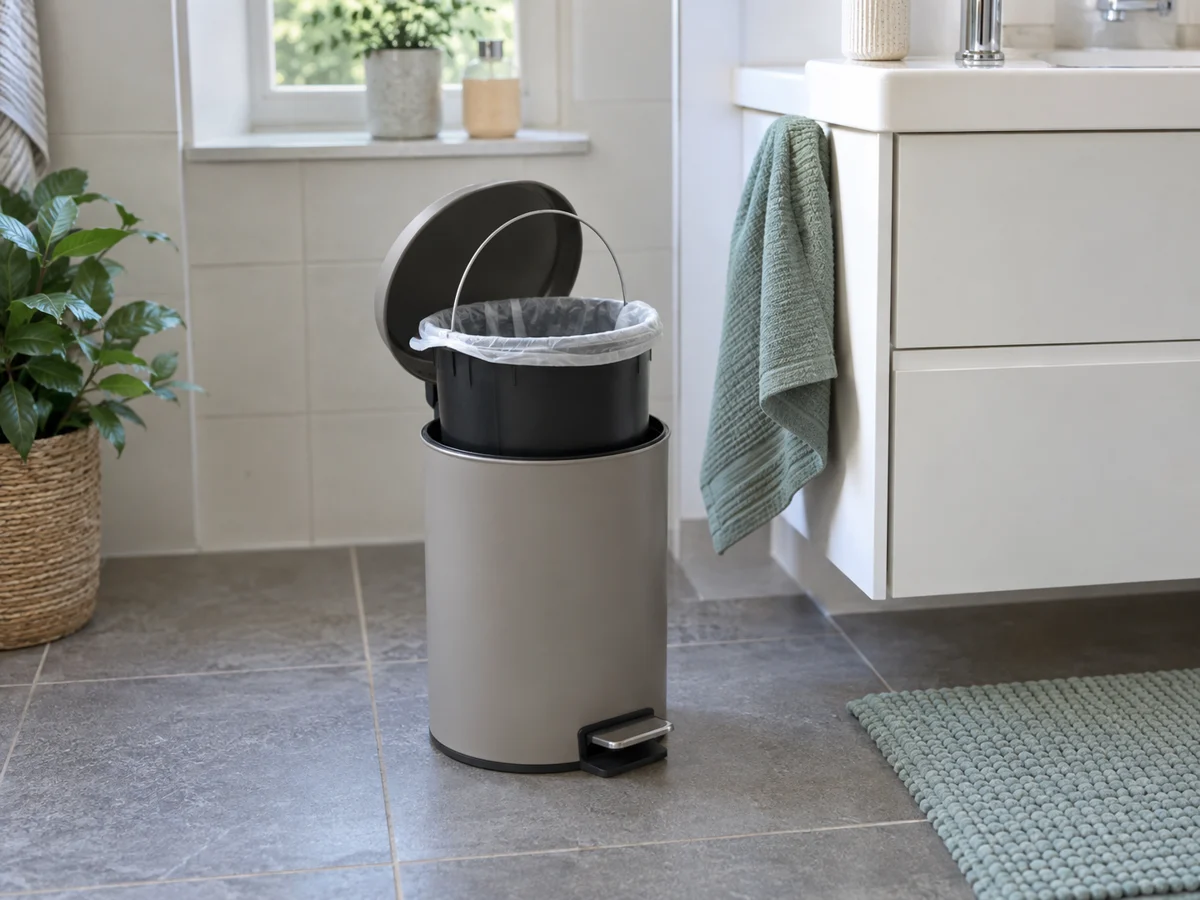
Check floor width and depth, then include any pedal projection and the space above for the lid. A bin beneath a shelf may fit when closed but not open fully. A wall-mounted design needs its documented fixing method and access for removal. Compare the route around the toilet, vanity, or shower rather than treating a narrow corner as automatically suitable. Mark the full working footprint and imagine reaching it with the bathroom in its normal occupied arrangement.
Choose a usable opening method
A pedal avoids one kind of hand motion but needs clear floor space in front. A push or touch lid uses another motion and may require more frequent surface cleaning. An open bin is simpler but presents a different arrangement for the contents. Choose according to the actual household use rather than assuming a more elaborate mechanism is always more convenient. If the lid has a soft-close feature, check how it is maintained and whether a simple manual opening remains practical.
Inspect the liner and bucket
A removable inner bucket can make emptying easier, but its handle and opening shape affect how the bag comes out. IKEA's bathroom-bin range includes such designs, providing details worth comparing individually. Check whether standard liners of a suitable size fit or whether the product needs a specific format. A hidden liner ring can look neat while adding another part to remove and wash. Compare the usable inside volume rather than assuming the whole exterior cavity is available for waste.
Make cleaning and capacity realistic
Look at hinges, rim channels, and the space around a pedal mechanism where residue or dust can collect. Read the maker's cleaning guidance for the finish and removable components. A very large bin may need fewer emptying trips but occupy more bathroom space than the actual routine requires. A small one needs more frequent attention. Choose a capacity that matches the way you maintain the bathroom, and avoid paying for a mechanism whose instructions or replacement parts are difficult to find.
THE USEFUL TAKEAWAY
Choose a bathroom bin by access, emptying, and cleaning rather than closed dimensions alone. The lid and liner system should work within the actual gap, with a manageable inner bucket if included. Useful capacity is the amount that suits your routine without making a small bathroom harder to move through.
Further information
Manufacturer and official references for the details discussed. Check instructions for the exact product you are considering.