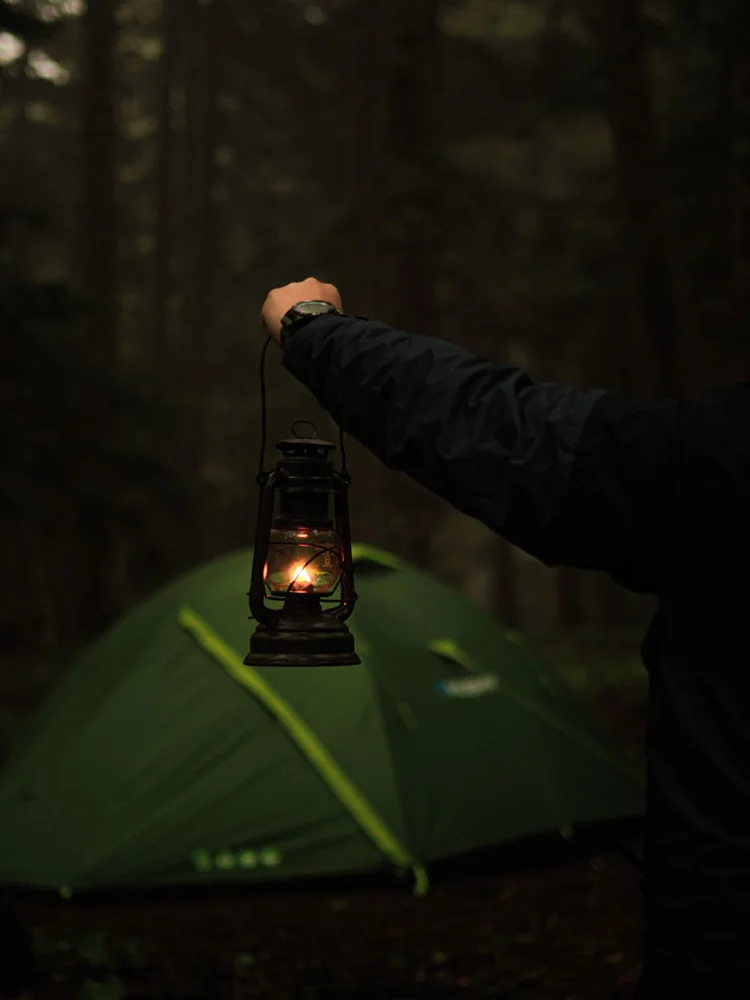
A lantern for casual camping should provide convenient light for the tasks you expect to do, such as finding belongings or sitting around a table. Maximum brightness is only one comparison. Beam spread, low settings, controls, battery arrangements, and a useful hanging point affect the experience after dark. Think about where the lantern will stand or hang and how it will be recharged or supplied. A smaller simple light can be a better fit than a large lantern bought around an impressive headline output.
Choose the light pattern for the task
A lantern that spreads light around a table serves a different purpose from a directional torch. Look at product images showing the illuminated area, while remembering that photographs do not establish a precise brightness comparison. A diffuser can reduce the direct view of an intense source. Check whether the lantern offers a comfortably low setting as well as its maximum. If you already own a suitable headlamp with an intended diffuser accessory, compare that complete arrangement before adding another standalone device.
Compare brightness with runtime at that setting
A maximum-output claim and a longest-runtime claim may refer to different settings. Read the manufacturer's table and compare both figures at the level you expect to use. Petzl's lighting guidance explains the basic tradeoff between greater output and available operating time. Do not combine the most favorable numbers from separate modes into an imaginary specification. Check how the maker describes output changes over time and what any reserve mode means. A clear useful low setting can matter more than a brief very bright mode.
Plan power for the actual trip
Identify battery type, charging connector, any included cable, and whether a compatible power source is needed. A rechargeable light is convenient when recharging fits your journey; replaceable batteries create a different supply routine. Read the instructions for permitted batteries and charging conditions rather than mixing components based on appearance. Check whether the battery can be replaced through the maker's intended process. If the lantern also charges a phone, consider that shared battery use separately instead of assuming it leaves lighting runtime unchanged.
Inspect handling and storage details
Try the controls and notice whether you can select the desired mode without cycling through several unwanted effects. A lock or covered switch can help with packing if the model offers it. Check the standing base and hanging arrangement against the intended position. Read the stated weather-resistance and use limits; an outdoor label is not a universal exposure guarantee. Compare the packed size with your gear and follow the storage instructions after the trip. A lantern should be easy to find, operate, and maintain when you need it.
THE USEFUL TAKEAWAY
Choose a lantern by useful light and a workable power routine. Compare runtime at the setting you will use, then check controls and mounting. A modest light with understandable modes and practical charging can offer better value than a large output figure that says little about an ordinary evening outdoors.
Further information
Manufacturer and official references for the details discussed. Check instructions for the exact product you are considering.