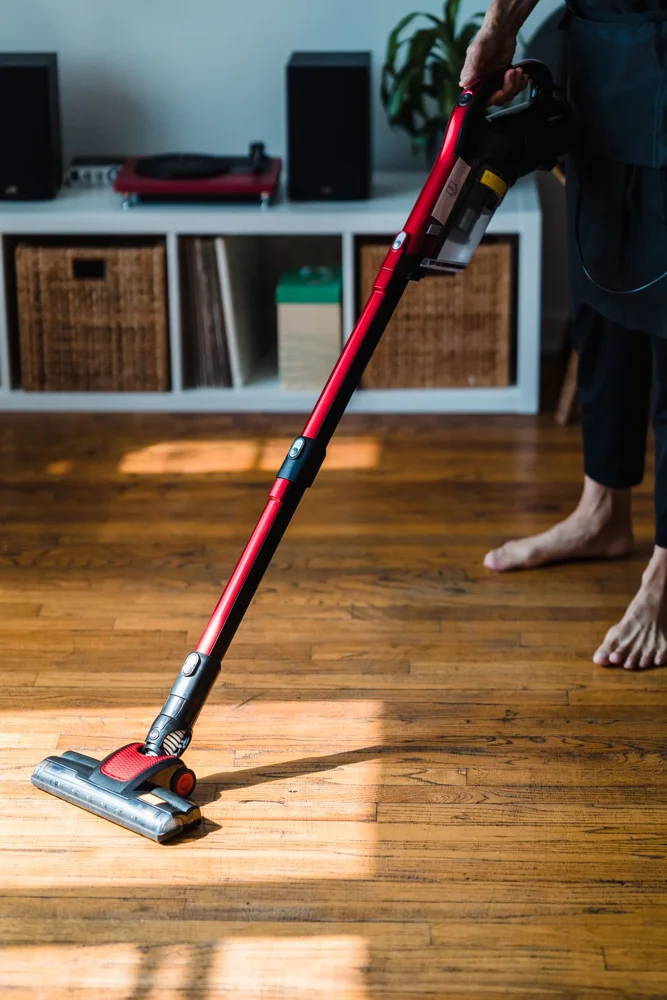
A home with rugs, wood flooring and a tiled kitchen asks more of a vacuum than a single suction figure suggests. The useful question is how quickly you can move between those surfaces without dragging grit, fighting a floor head or stopping to change tools. Begin with a list of the floors you actually clean, including stairs and narrow spaces under furniture. A well matched basic machine can be a better purchase than a bundle with attachments that stay in the cupboard.
Map the route before the specifications
Walk your usual cleaning route and note tight turns, thresholds and places where an outlet change would be needed. A canister may follow you easily through an open room but need lifting at a step. An upright may stand conveniently in a cupboard yet feel awkward on stairs. Compare complete working weight, including the floor head and wand, rather than a motor unit weight that leaves much of the machine out of the calculation.
Check each floor head separately
Look for the manufacturer's stated suitability for each floor type and the controls needed to change modes. Do not assume an aggressive brush is appropriate for every rug or wood finish. Check your flooring and rug care guidance as well as the vacuum manual. A head that reaches under a sofa is useful only if the joint still pivots there and the cleaner can draw it back without catching the edge of a nearby rug.
Build maintenance into the choice
Find the replacement bag, belt, roller and filter before buying. Some filters are washable; others need replacement, so treat the actual manual as the authority. Dyson's filter instructions, for example, require full drying before reinstallation, which shows why a washable part still needs planning. Check whether tangled hair can be removed without dismantling half the head, and whether emptying the dust container is practical beside the bin you already use.
Compare one ordinary cleaning session
Use a return policy or an in-store demonstration to assess steering, transitions and tool changes. Try the control you will touch most often, such as the brush switch or wand release. Noise, cord storage and the ability to pause upright can matter more during everyday cleaning than a feature used once a month. If one awkward surface is small, a simple dedicated tool may cost less than upgrading the whole vacuum around that exception.
THE USEFUL TAKEAWAY
Choose the vacuum around the whole route through your home. Suitable floor heads, manageable handling and accessible replacement parts provide more lasting value than an attachment count. Leave room in the budget for the consumables your chosen machine actually needs, and follow its care instructions rather than general vacuum advice.
Further information
Manufacturer and official references for the details discussed. Check instructions for the exact product you are considering.